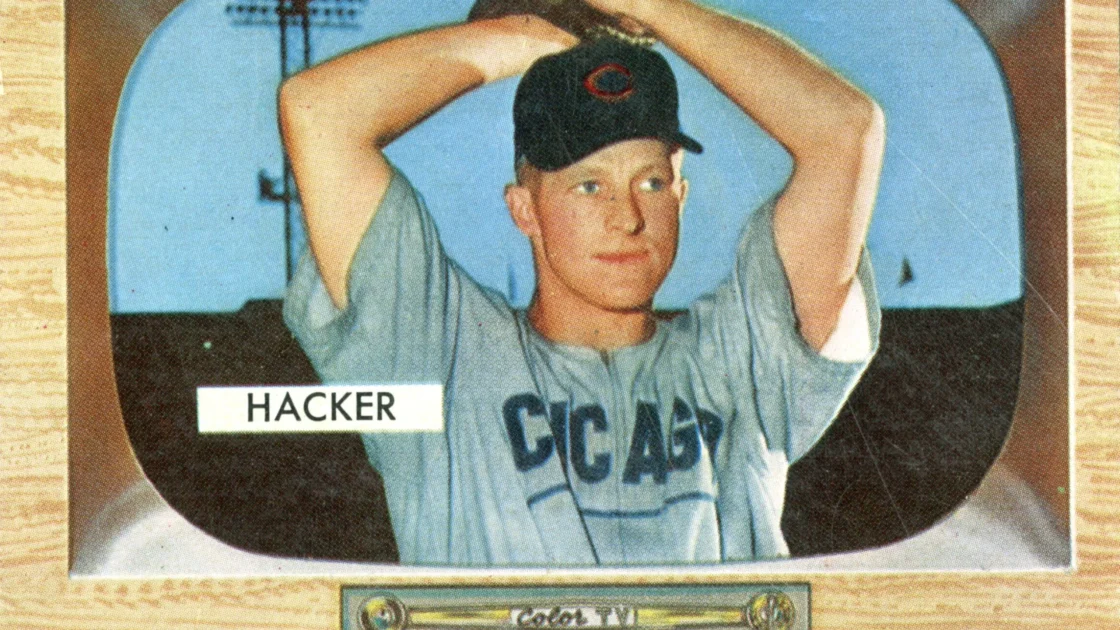
Right-handed pitcher Warren Hacker largely represents the Chicago Cubs experience during the 1950s, characterized by a single standout campaign followed by a slide into mediocrity due to injuries, poor coaching, and minimal roster support.
Early Life and Arrival in Chicago
Originally from Marissa, Illinois, a small southeastern community near St. Louis with a population hovering around 1,900, Hacker entered the world in 1924. The Cubs secured his services via a minor-league transaction in 1948, though he did not cement a regular spot in the starting rotation until 1952.
During that breakthrough 1952 season, Hacker recorded a 15-9 win-loss record, a 2.58 ERA, and 12 complete games across 33 total appearances, which included 20 starts. He also topped all of Major League Baseball with a 0.958 WHIP and earned 22nd place in the National League MVP voting during an era that predated the Cy Young Award.
Teammate Hank Sauer claimed the NL MVP award that same year, helping the Cubs finish with a 77-77 record, which stood as their only non-losing season between 1947 and 1966. Hacker pitched a five-hit complete game against the Phillies on June 12, elevating the Cubs to third place with a 32-19 record just four games behind the league-leading Dodgers. However, the squad managed only a 45-58 record for the remainder of the season because Hacker and Sauer carried the bulk of the team’s workload.
Struggles and Franchise Records
Hacker failed to replicate that success in subsequent years. He led the majors by allowing 35 home runs the following season, and in 1955 he surrendered 38 long balls, a franchise record that remains intact. During the 1955 season, Hacker came close to baseball history by carrying a no-hitter into the ninth inning against the Milwaukee Braves before George Crowe ruined the bid with a solo home run, though the Cubs ultimately secured a 2.1 victory.
Following the 1956 campaign, the Cubs traded Hacker alongside Don Hoak and Pete Whisenant to the Cincinnati Reds in exchange for Ray Jablonski and Elmer Singleton. Hoak had actively demanded a trade due to his dissatisfaction with playing in Chicago, leaving the Cubs with minimal leverage in negotiations. Jablonski departed before the subsequent season without ever playing a game for the Cubs, while Singleton joined the organization at age 39 as a reserve piece.
Hacker experienced limited success after the trade, moving from Cincinnati to Philadelphia and later the Chicago White Sox before concluding his major league career following the 1961 season. He continued playing in the minor leagues through 1967 before serving as a minor-league pitching coach for the Athletics from 1967 to 1971 and later working in the Padres organization during the 1970s. Hacker passed away on May 22, 2002, at the age of 77 in Lenzburg, Illinois, near his hometown.
Accumulating 13.5 bWAR across his nine seasons with the Chicago Cubs, Warren Hacker sits at No. 99 on the franchise’s all-time player rankings.