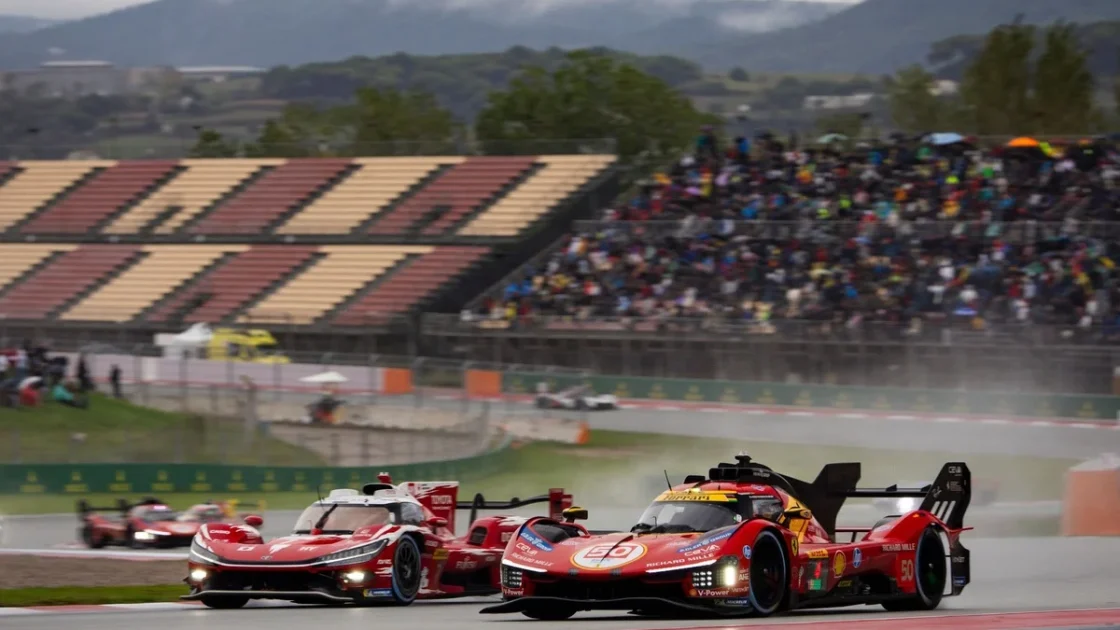
Ferrari believes abolishing the contentious Balance of Performance should be the final goal for the World Endurance Championship rulemakers as they work towards finalising the framework for the 2030 Hypercar regulations. Antonello Coletta, Ferrari’s global head of endurance, argued that the move to a unified platform to replace the current LMDh and LMH divisions has removed the need for an artificial system to govern the top class.
Pushing for Meritocracy in WEC
Currently, the FIA and the ACO are responsible for balancing the performance of cars through a complex set of parameters related to power and weight. However, the system is designed not only to equate LMH and LMDh, but also to account for differences between cars built to the same regulations. Coletta believes axing BoP would move the championship towards greater meritocracy and eliminate unnecessary discussions about the subject, particularly after the WEC stopped making any information about BoP public this year.
According to Coletta, the industry has a very good opportunity for 2030 after starting with two different platforms and ideas. He stated that everyone is now around the table to define a unique platform, which allows rules to be written clearly so the final goal can be deleting the BoP. He noted that BoP was originally born due to different platforms like four-wheel drive, two-wheel drive, LMDh, and LMH. When asked if the regulations could reach a point where BoP can be dropped, he added that this is the dream for them.
Coletta said BoP can have a significant influence on a car’s performance and behaviour, arguing that limiting its intervention would be preferable even if the system cannot be eliminated entirely. However, he stressed that abolishing BoP was not mandatory for Ferrari, insisting the manufacturer’s decision to extend its stay in the championship beyond 2030 won’t hinge on whether the system features in the next set of regulations. Instead, Ferrari’s priority is to retain the freedom to build a car that carries the company’s DNA, much as it has done under the current LMH regulations.
Coletta explained that it is mandatory for them to have a chance to make the car. He noted that if they can make 100 percent of the car, they will see about BoP or little BoP, calling the discussion very complicated and open. He added that if they have a little percent of intervention with the BoP, it could be a solution, emphasizing the need for a marginal intervention rather than a large one, with their idea being to delete it completely or just keep a little.
Addressing the Four-Wheel Drive Debate
At June’s Le Mans 24 Hours, the WEC provided an early outline of the 2030 Hypercar regulations. The framework gives manufacturers the option of building their own chassis and powertrains or sourcing them from an external supplier. Crucially, the four-wheel drive system that has been an important feature of present LMH cars will be outlawed in 2030, much to the dismay of Toyota.
Coletta said Ferrari would prefer to race a car with a four-wheel drive system, but it wasn’t against the direction the championship is headed in. He stated that endurance is a good chance to test car parts and put good ideas into road cars, noting that modern four-wheel drive in terms of electric and hybrid cars is the future. For Ferrari, having four-wheel drive would probably be the best, but he acknowledged that apart from Ferrari and two other manufacturers, this is not of interest to the rest, making it clear that maintaining four-wheel drive would be complicated.