Table of Content
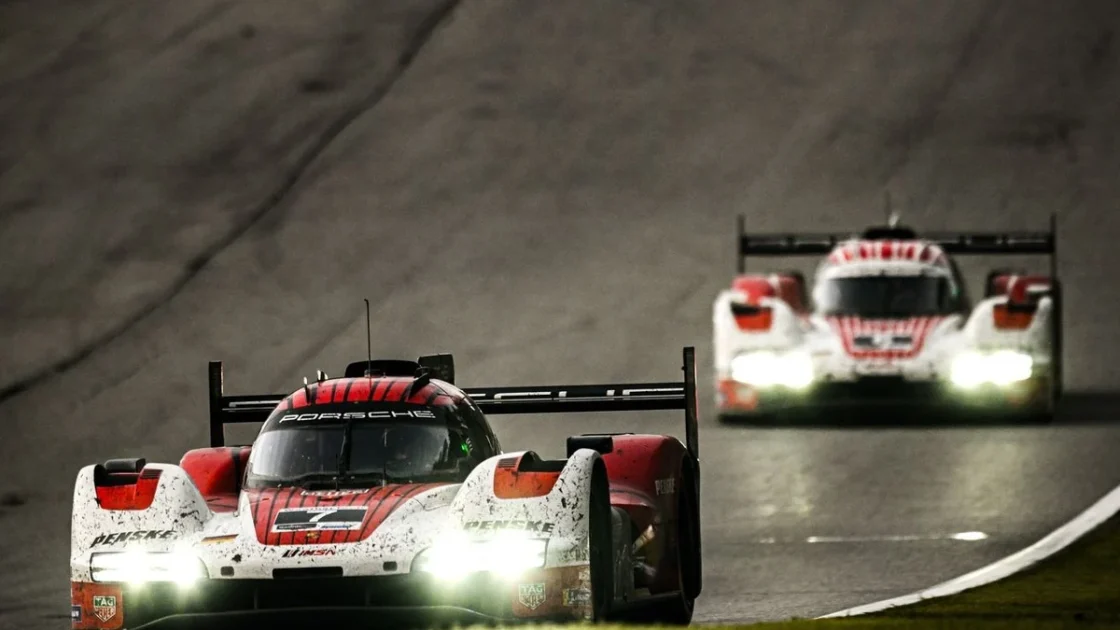
As World Endurance Championship and IMSA stakeholders prepare for the next generation of top-class sports car racing, Porsche Motorsport head Thomas Laudenbach has emphasized the urgency of establishing a clear regulatory foundation for 2030 and beyond.
Regulatory Framework Needed
The FIA and ACO outlined the key principles of the future regulations at the 2026 24 Hours of Le Mans. The new rules are intended to replace the current LMH/LMDh split at the top of sports car racing.
While key aspects such as the ban on both all-wheel drive and evo jokers, a design closer to road-car styling, the retention of hybrid powertrains, and a base weight of 1,040 kilograms paired with a base output of around 520 kilowatts have been defined, crucial questions—such as the power split between the electric motor and internal-combustion engine—remain unanswered.
Laudenbach highlighted that a detailed technical framework needs to be in place by Christmas to allow manufacturers enough lead time to evaluate potential future programs and technical concepts, telling Motorsport.com that the World Motor Sport Council does not meet every day. “I think it would be important this year at least to have a more detailed framework. Not finalized rules and regulations, but a good framework… If it would be in place end of this year, under the Christmas tree, that would be great,” he said.
Protecting the Future of Prototype Racing
The current era of prototype racing has brought larger grid sizes and manufacturer engagement across both WEC and IMSA. However, Laudenbach stressed that maintaining this momentum requires learning from the present generation of cars, especially following the exit of several manufacturers for various reasons, including Porsche itself in WEC.
Warning that sports car racing has a chance to mess up while it is on a high, Laudenbach stated that the rules for 2030 and beyond are extremely important for the future of prototype racing. He noted that manufacturers are sitting at the table with the FIA and the ACO, providing an opportunity to utilize lessons learned since 2023 with LMDh and LMH in IMSA and WEC to optimize the sport further.
Strict cost control was emphasized by Laudenbach as a key priority for the upcoming rules cycle. He noted that minimizing the need for constant frequent intervention from the sanctioning bodies would represent a major step forward, stating that getting rid of it entirely would be difficult, but minimizing the influence would make everybody happy and represent a real evolution of what has been created so far.
Stability Through FIA and ACO Agreement
Laudenbach also welcomed the recent 10-year agreement extension between the FIA and the ACO, which secured the joint management of the World Endurance Championship and the 24 Hours of Le Mans following reports of a potential split that could have separated WEC and Le Mans.
Expressing a positive view on the extension, he stated that a separation would not have been good for either WEC or Le Mans. He added that he is happy the agreement is signed because it ensures they go ahead with an endurance world championship featuring an integrated Le Mans.