Table of Content
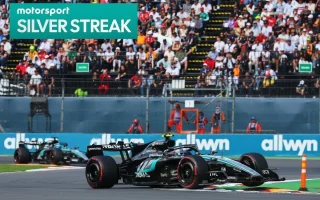
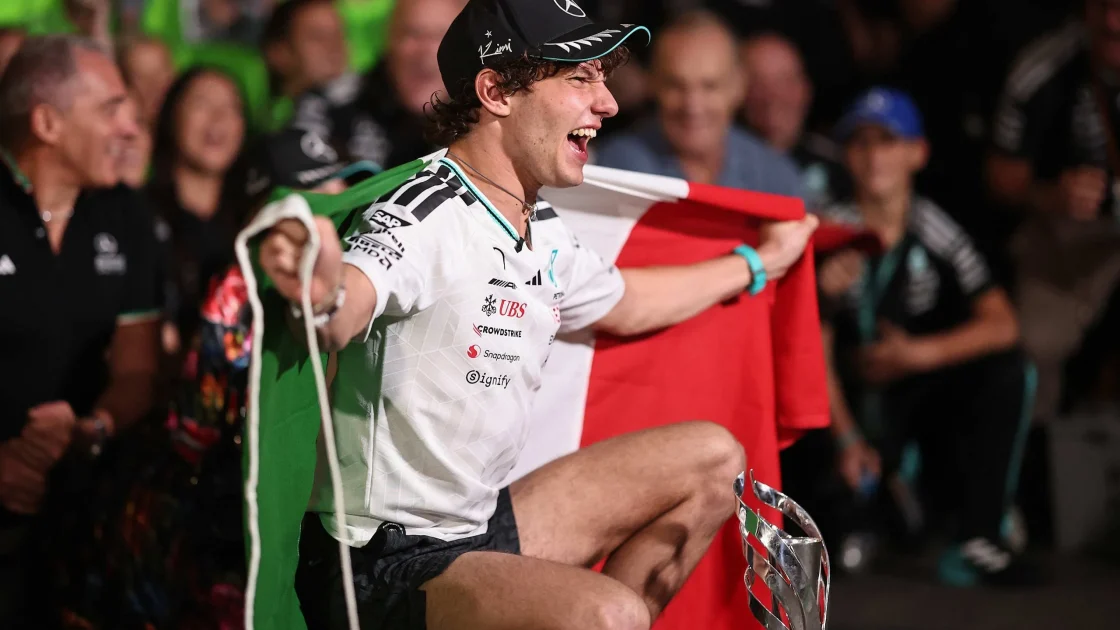
It has been a couple of weeks since Kimi Antonelli made history by becoming the youngest World Champion in Formula 1, prompting Formula1.com writers Lawrence Barretto, Chris Medland, and James Hinchcliffe to reflect on what his record-breaking achievement means for both the driver and the sport.
Lawrence Barretto on Antonelli’s Resilience and Growth
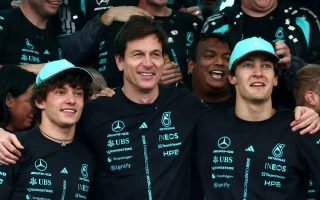
Lawrence Barretto recalled first spending time with Antonelli in Monza in 2024, just a day after the young driver crashed on his FP1 debut. Antonelli had already addressed, learned from, and compartmentalized the mistake, displaying an impressive level of maturity while Mercedes prepared to announce his 2025 debut. That mental strength proved vital during a turbulent rookie season that featured three podium finishes alongside a difficult European stretch where he scored only a single point, leading team boss Toto Wolff to describe his performance at Monza as underwhelming.
Barretto noted that Antonelli maintained his focus with the help of a close-knit family and supportive Mercedes inner circle. When Mercedes provided him with a title-contending car for 2026—earlier than originally planned—Antonelli capitalized on the opportunity. While his more experienced teammate and title favorite, George Russell, struggled, Antonelli excelled. Securing nine Grand Prix victories, including standout wins in Monza and Austin, he surpassed Sebastian Vettel as the youngest champion in F1 history while retaining his characteristic charm.
Chris Medland on Antonelli’s Race Craft and Future Prospects
Chris Medland admitted to underestimating Antonelli ahead of the 2026 season, expecting a campaign of fluctuating results and predicting that Russell would claim the title. While the new car regulations leveled the playing field to some degree, Medland emphasized that Antonelli’s superiority over Russell cannot be dismissed as merely a regulatory byproduct, especially given how seamlessly Russell had adapted to the new machinery.
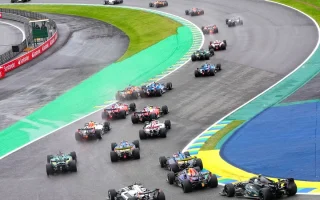
Medland highlighted Antonelli’s ability to handle pressure effortlessly, maximizing his race results consistently without showing tension until the final lap in Mexico City. After adopting a cautious approach in early wheel-to-wheel battles, Antonelli refined his race craft as the season progressed. Race engineer Peter Bonnington suggested Antonelli possesses the capability to match Michael Schumacher and Lewis Hamilton, setting the stage for a compelling 2027 season if he secures another competitive car to battle Hamilton, Max Verstappen, and Lando Norris.
James Hinchcliffe on Witnessing Generational Greatness
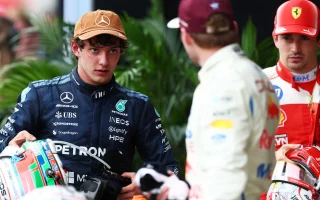
James Hinchcliffe pointed out the significance of Antonelli sharing a podium in Mexico City with Verstappen and Hamilton, marking the moment another historic record fell to the Italian driver. Surpassing Vettel’s record by more than three years is a monumental feat that is unlikely to be repeated. Hinchcliffe stressed that Antonelli’s success was not a stroke of luck, noting that the driver had to defeat Russell—someone who previously went toe-to-toe with Hamilton—using exceptional decision-making and calm under pressure rather than raw speed alone.
Hinchcliffe observed that even as competitors closed the performance gap during the season, Antonelli maintained his composure and executed at the level of a seasoned veteran. Drawing comparisons to the early days of Hamilton and Verstappen, Hinchcliffe concluded that watching Antonelli evokes the exact same feeling of witnessing a generational talent at the dawn of a dominant era.