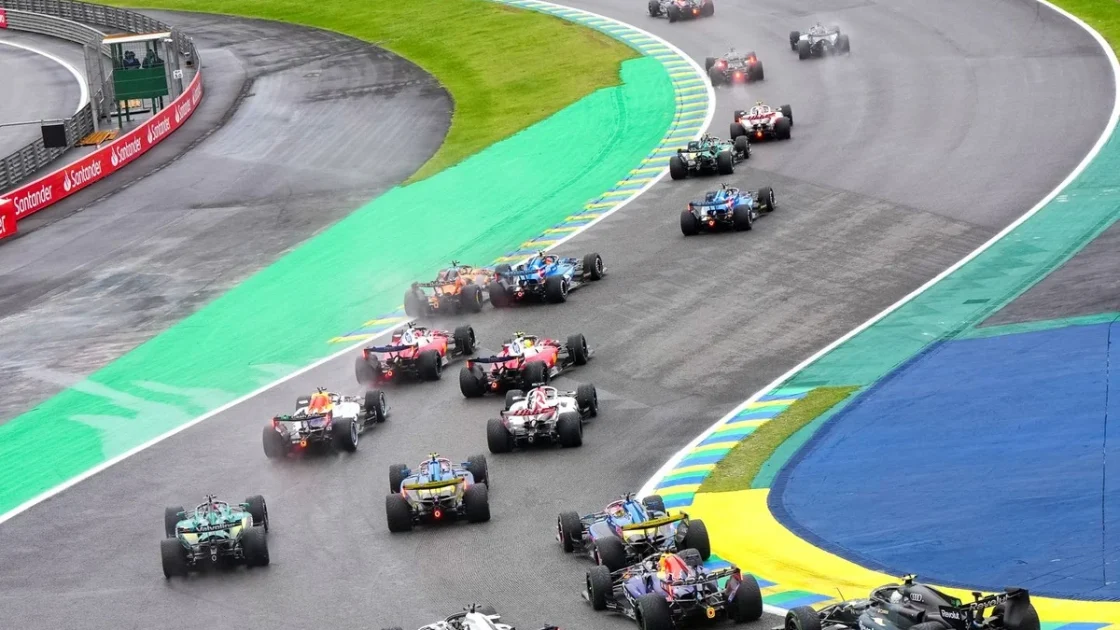
Despite initial fears of prolonged dominance by Mercedes at the start of Formula 1’s 2026 technical regulation cycle, the championship has transformed into a closely contested battle among four front-running teams. Rapid in-season development and engineering refinement have allowed Red Bull, Ferrari, and McLaren to significantly reduce the gap during the second half of the season.
A Frantic In-Season Development Race
The season began with concerns of a dominant campaign after George Russell secured pole position at the opening race in Australia by eight-tenths of a second over his nearest rival. Mercedes capitalized on its early advantage to lock up both the drivers’ and constructors’ world championships with three races remaining, despite experiencing early reliability concerns with its power unit.
However, performance levels converged following the summer break as teams introduced major upgrade packages. Lando Norris claimed victories in Hungary and the Netherlands for McLaren, while Ferrari secured wins with Lewis Hamilton and Charles Leclerc. Red Bull staged a major recovery by regaining roughly one second of lap time, enabling Max Verstappen to win three of the past five races. In the constructors’ standings since the summer break, Mercedes leads Red Bull by a single point with 227 points to 226, while Ferrari has collected 172 points and McLaren has scored 133.
Qualifying margins have highlighted the tightening field across several circuits. At the inaugural Spanish Grand Prix in Madrid, the top five drivers across four different constructors were separated by 0.195 seconds. The top four teams were separated by within three-tenths of a second in Singapore and Mexico, while Kimi Antonelli, Verstappen, and Leclerc were separated by 0.230 seconds at the Circuit of the Americas in Austin.
Key Factors Driving Performance Convergence
Speaking to Autosport, McLaren team principal Andrea Stella explained that team performance reflects the high level of engineering expertise operating under financial constraints. “In my view, teams have never operated at these standards,” Stella said in Austin. “Four teams, and even the other teams, keep developing at this rate within a cost cap and somehow everyone has found a way to deliver lots of upgrades.”
Ferrari team principal Fred Vasseur noted that the steep development curve explains the shifting form between race weekends. Vasseur observed that Mercedes held an advantage of six to seven tenths of a second during the first six races before Ferrari closed the gap and began scoring more points after Madrid, while also highlighting effective updates such as McLaren’s front wing introduced in Brazil.
Red Bull team principal Laurent Mekies told Autosport that while the regulations appear restrictive, teams continue to find areas for innovation, such as Ferrari’s rotating rear wing design. Mekies added that entering a race weekend with four teams capable of winning creates strong entertainment value for the sport.
Mercedes team boss Toto Wolff acknowledged that defending titles next year will present a major challenge, noting that his squad has already turned its focus toward 2027 development during the final three races of the current season.