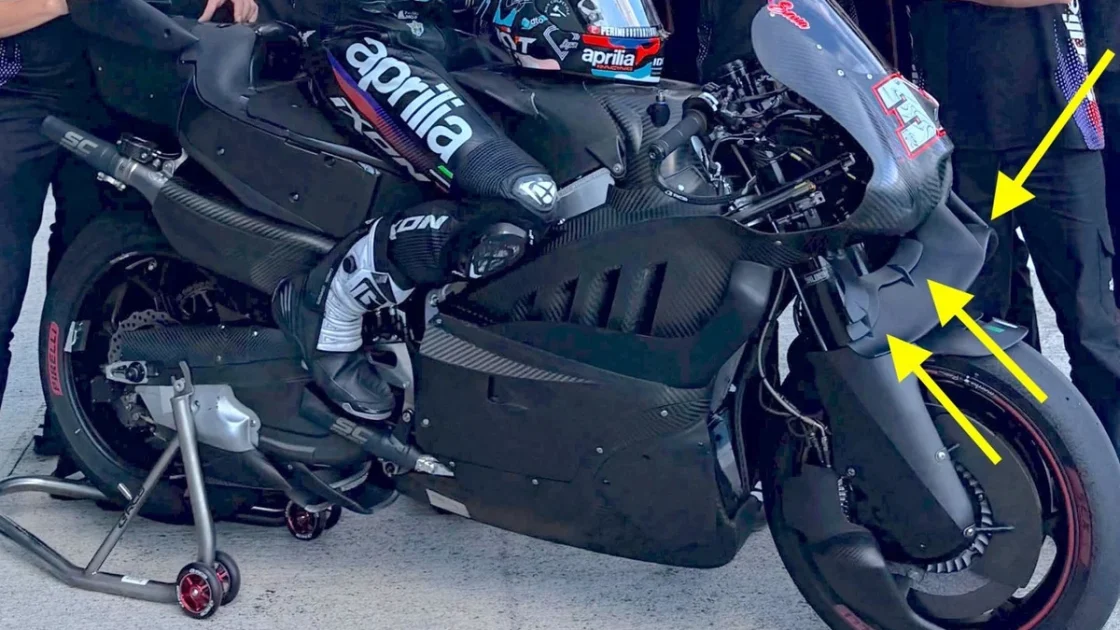
Aprilia has signaled a strong commitment to aerodynamic innovation as MotoGP prepares for its transition to 850cc engines in 2027. Test rider Lorenzo Savadori recently provided a glimpse of the manufacturer’s prototype development following a testing session in Jerez.
Aerodynamic Innovations for 2027
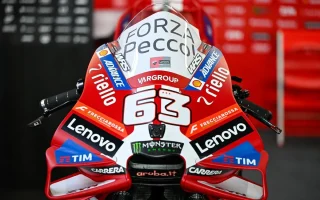
The prototype, developed under the guidance of technical lead Fabiano Sterlacchini, showcases several distinct design choices. While the bike remains an early iteration—distinct from the version expected to debut at the Valencia test on December 1—the images reveal a focus on airflow management. The front wing assembly now utilizes two mounting pillars, creating a wider channel between the curved profile and the ram-air intake to facilitate increased airflow.
A notable departure from previous designs is the replacement of the traditional “fork wing” with a series of cascading flaps. Due to 2027 regulatory constraints that prohibit aerodynamic elements from extending beyond the fork, Aprilia has repositioned these components inward. The design includes a vertical flap extending from the front fairing that partially encircles the fork leg. A small support structure connects this to the main wing, which also holds a secondary, complex-shaped element engineered to produce downforce while minimizing drag.
Testing and Future Development
These developments suggest that aerodynamics will remain a critical performance factor in the 850cc era, despite regulatory efforts to curb their influence. According to reports from Autosport.com, ongoing research in computational fluid dynamics (CFD) and wind tunnel testing indicates that engineers are already finding ways to maintain high levels of aerodynamic efficiency, challenging the assumption that the new regulations would lead to a significant performance regression.
During the recent session at the Jerez circuit, improving weather conditions allowed for productive testing. Nicolo Bulega, riding a Ducati GP27, recorded the fastest time of 1m39.253s. Savadori followed as the second-fastest rider, finishing roughly three tenths of a second behind Bulega, while KTM’s Pol Espargaro placed third. Teams focused on evaluating these new technical solutions rather than attempting qualifying-style time attacks, as they finalize their aerodynamic configurations ahead of the upcoming Valencia test.