Table of Content
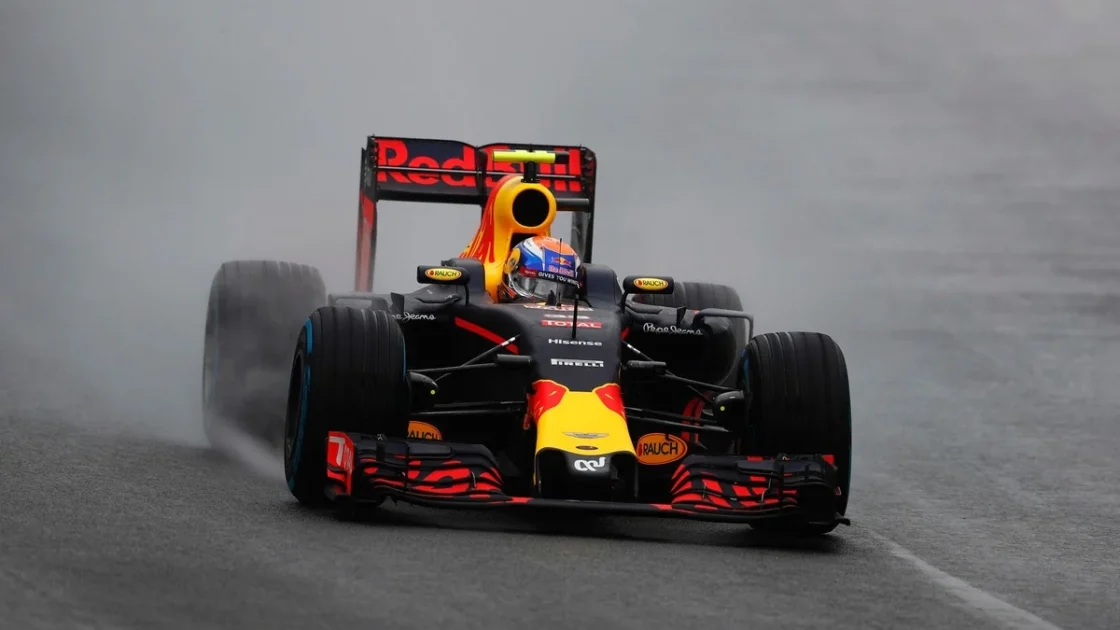
Max Verstappen has shared insights into the driving style and track characteristics that allow him to excel in wet-weather conditions at the Autodromo Jose Carlos Pace in Sao Paulo. The Red Bull driver has consistently delivered standout performances in the rain at the Brazilian Grand Prix, a venue where he maintains one of his highest career podium-finishing rates.
A History of Wet-Weather Success
Verstappen’s history at Interlagos includes several notable performances in the rain. As an 18-year-old in 2016, he navigated past Kimi Raikkonen’s Ferrari early in the race and executed a high-speed pass on Nico Rosberg around the outside of the Curva do Sol. In 2024, he climbed from 15th on the grid to secure a dominant victory, finishing 19 seconds ahead of Esteban Ocon.
During last weekend’s race, Verstappen started from 21st on the grid but managed to reach seventh place within five laps. He ultimately finished second, 15 seconds behind race winner Lando Norris. Despite the result, the four-time world champion noted that he believed a stronger performance was possible.
Understanding the Grip
Reflecting on his recent performance, Verstappen explained that his confidence grew quickly once the race began. “After the laps to the grid, I felt pretty confident,” he told Motorsport.com. “I went out and I was like, ‘Oh, low grip’. But then I actually had some cars around me and I was like, ‘No, I think we actually have a lot of grip’.”
He noted that his car’s balance allowed him to overtake quickly during the opening stint. However, he expressed concern regarding the car’s performance after switching to slick tires. “Unfortunately, that then completely disappeared after the first stint, but luckily at least in the first stint the car was working, and that allowed me to be in this position,” Verstappen said. He added that the team needs to investigate why the car’s handling changed so drastically when switching back to intermediate tires later in the race.
Track Characteristics and Racing Lines
When asked about his ability to find opportunities in the rain, Verstappen credited the unique layout of the Interlagos circuit. He explained that the track’s elevation changes and the availability of multiple racing lines are amplified during wet conditions, creating more chances for overtaking.
“This track, of course, also allows you to do different lines, which I think is great because it really helps the racing,” Verstappen explained. “You need to feel good in the car. You need to feel comfortable to be able to risk probably a little bit more, and it’s been working for me quite well here.”
Having started from 15th or lower in each of the last three Brazilian Grands Prix—a stretch that included 23 overtakes and three podium finishes—Verstappen expressed a desire for a more conventional start in future events. “Maybe next year I’d love to start a bit further up front instead of starting from the back or the pit lane, but we’ll find out next year,” said the driver, who has secured the runner-up position in the 2026 drivers’ championship.