Table of Content
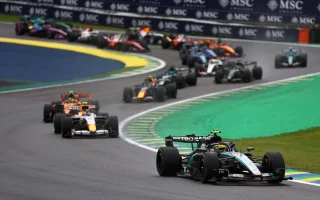
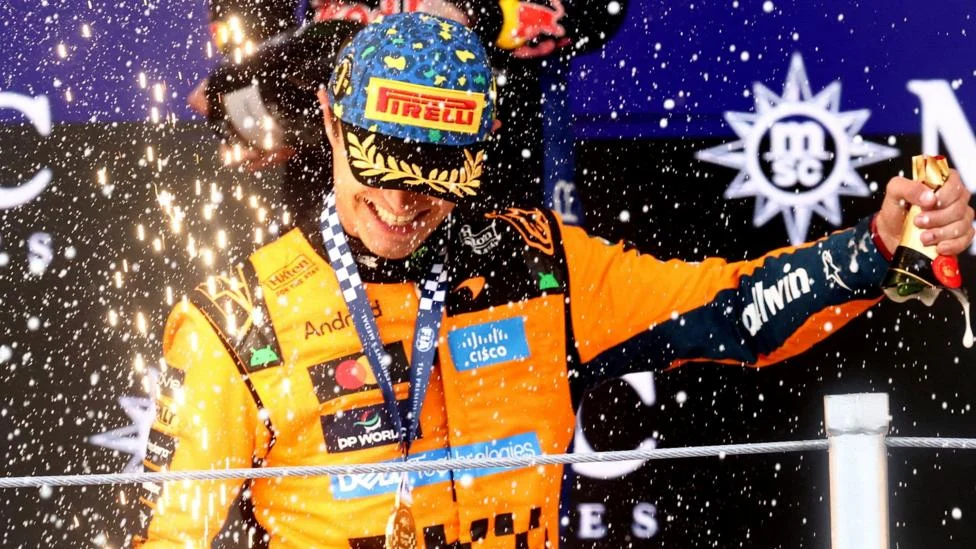
Mercedes secured the constructors’ championship for the first time since 2021 at the Sao Paulo Grand Prix after George Russell finished fourth and new world champion Kimi Antonelli placed fifth. McLaren’s Lando Norris won the race from pole position, while Max Verstappen charged from the back of the grid to take second place ahead of Red Bull team-mate Isack Hadjar.
Lewis Hamilton’s Longevity and Form
Addressing questions about Lewis Hamilton’s status after his 400th grand prix, BBC F1 correspondent Andrew Benson noted that the seven-time world champion is statistically the most successful driver in history with the most race wins and pole positions. Although Hamilton faced a tougher period with ground-effect cars between 2022 and 2025—being beaten by Russell and Charles Leclerc—he has returned to strong form this season with the latest regulations.
Hamilton addressed his form and age at Interlagos, stating that he still possesses the necessary speed, pace, and dedication. Regarding how long he can remain at the top, Benson pointed out that Fernando Alonso continues to perform at a high level at age 45. Hamilton has stated a desire to race until F1 returns to Africa in 2030 at the earliest, when he will also be 45, though his current Ferrari contract is believed to conclude next year.
Understanding ‘Yo-Yo Racing’ and Engine Rules
Explaining the reduction in ‘yo-yo racing’—where cars swapped positions multiple times per lap earlier in the year—Benson stated the phenomenon was caused by new power-units featuring a 50-50 split between internal combustion and electrical power. These energy-starved engines utilized ‘boost’ and ‘overtake’ modes that created variable energy levels among drivers.
This behavior has decreased recently because recent tracks are less energy-starved, teams and drivers have gained a full season of experience with the power-units, and rules have been introduced to cap energy limits at difficult venues. Further rule modifications will alter the energy split to 60-40 in two steps by 2028, which is expected to lower overtaking frequency while improving driveability.
Driver Transfers and Reserve Roles
Discussing why drivers like Esteban Ocon seek reserve roles rather than competing in other series after losing a race seat, Benson explained that staying in the paddock keeps a driver familiar with current machinery through simulators and maintains visibility. Competing in alternative categories like IndyE, Formula E, or endurance racing risks a driver being forgotten by the F1 grid.
Regarding Liam Lawson’s unconfirmed status for 2027 at Racing Bulls, the decision rests with Red Bull shareholders Chalerm Yoovidhya and Mark Mateschitz, alongside F1 boss Oliver Mintzlaff. Lawson competes with Arvid Lindblad and Nikola Tsolov for a seat, with Racing Bulls team boss Alan Permane indicating that management prefers a deliberate, analytical approach rather than making rushed decisions.
Balancing Classic Circuits and New Venues
On the preservation of classic circuits, Benson reported that F1 faces a balancing act between global reach, entertainment, and financial revenue. Classic tracks often cannot match the large fees paid by autocracies utilizing races for national promotion. Nevertheless, F1 implements compromises to retain historic venues like Monaco, Silverstone, Spa, and Suzuka.
At the same time, the sport works to make new locations as engaging as possible, combining spectacle with technical design. Former driver Alex Wurz, who designed new circuits in Qiddiyah and Rwanda slated for future calendars, has worked to ensure those permanent tracks provide driving challenges and promote competitive racing.