Table of Content
Cristiano Ronaldo has announced his international retirement at the age of 41 following a 23-year career with Portugal, ending his time with the national team after a recent fallout with coach Jorge Jesus. BBC Sport reported that his departure comes just under a month after his old rival Leo Messi bid farewell to Argentina amid widespread celebration.
A Bitter End and Training Ground Fallout
Ronaldo’s exit followed a dispute with Jesus that resulted in a 30-day sanction, which had already been served, and a 255-euro fine. The punishment was issued after the veteran striker left the team’s training camp without permission. Jesus kept him on the bench for one match and stated he did not plan to start him in the next fixture, prompting Ronaldo to return home. His final appearance for Portugal took place on September 24 against Wales. He concludes his international career holding records of 146 goals in 234 games.
While messages circulated across Portugal thanking Ronaldo and praising him as a global ambassador and an inspiration, the manner of his departure left a bitter taste. Although Jesus noted that the door remained open and the decision was ultimately Ronaldo’s, it was evident that the forward was no longer an automatic starter—a status Cristiano has historically struggled to accept. Sociologist Joao Nuno Coelho noted that Ronaldo created contradictory feelings in Portugal, where citizens wanted to be proud of him while occasionally feeling uneasy about his individualism and ego.
Early Years and Mentorship Under Scolari
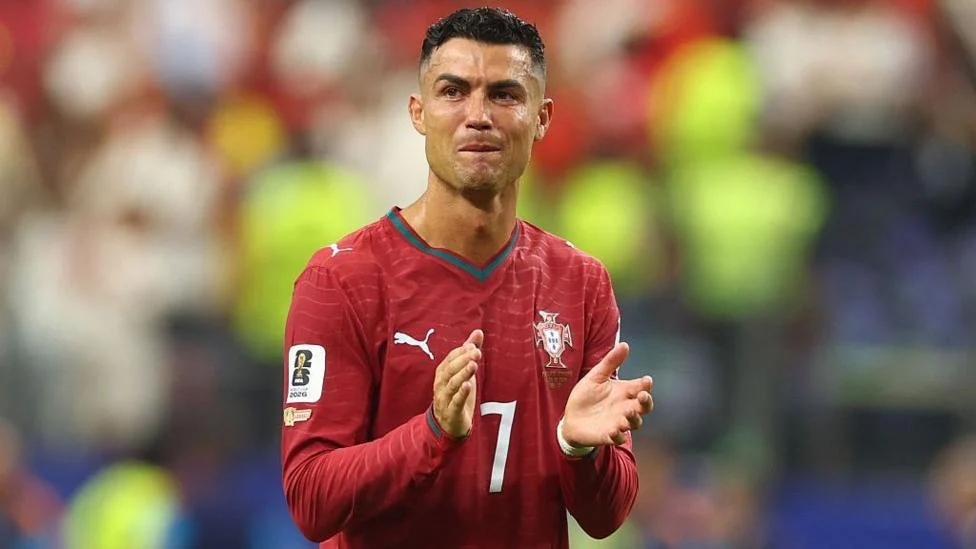
When Ronaldo first joined the squad as a young player, he arrived wearing a backward baseball cap, large sunglasses, and loud headphones. Luiz Felipe Scolari recognized his extraordinary talent but viewed him as immature and overly showy, reprimanding him publicly before telling him privately that changing his attitude would eventually earn him the captaincy. His first major heartbreak arrived at age 19 during the Euro 2004 final at the Estadio da Luz, where a single header from Angelos Charisteas gave Greece a shock victory. The image of the teenager crying on the pitch became a defining moment of his early career.
Luis Figo held the number 7 shirt at the time, leading Ronaldo to wear number 17. Figo helped him settle before leaving the national team in 2006, after which the shirt and the team became Ronaldo’s. In September 2005, prior to a qualifier in Russia, Scolari and Figo entered his hotel room to inform him that his father had passed away. When Scolari offered to send him home, Ronaldo chose to play, asked his teammates to act normally, and spent time in the dressing room performing ball tricks to cope with the loss. He later referred to Scolari as a father, cementing the national team as a stabilizing force in his life.
Transforming Portugal Into Contenders
Relations grew strained later with Carlos Queiroz after the 2010 World Cup exit against Spain, when Ronaldo told journalists to ask the coach about the team’s poor performance. Under Fernando Santos in 2016, however, Ronaldo adapted, accepting a role as a center forward alongside Nani. During the Euro 2016 tournament, he supported his teammates intensely, famously encouraging them from the technical area and telling Eder that he would score during the final against France, which Portugal won to secure their first major title. Ronaldo added a Nations League title in 2019 and another in 2025.
Under his guidance, Portugal evolved from a talented squad into a team that entered every tournament expecting to contend, while younger generations grew up in a dressing room where he set the standard. Under Roberto Martinez, he maintained strong statistics, scoring 28 goals in 37 matches for an average of 0.756 goals per game.
The Portuguese federation has announced a special tribute to honor his contributions, providing fans an official opportunity to celebrate an icon who took them to unprecedented heights.