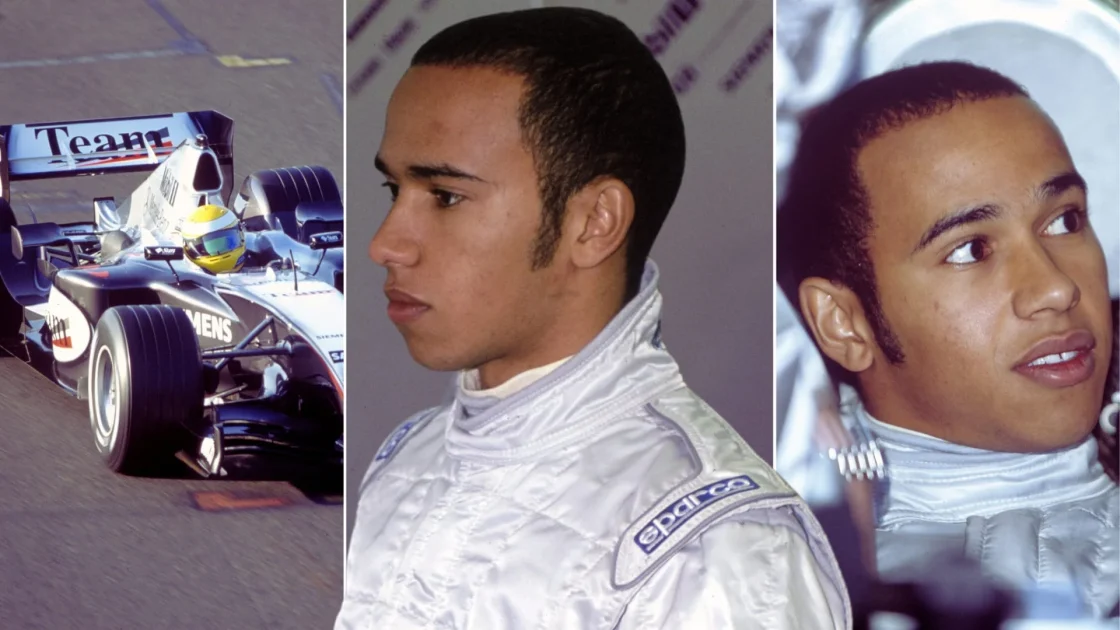
The first-ever Formula 1 test drive of Lewis Hamilton brought unique weather conditions and an overwhelming sense of speed for those on track, according to accounts from the time. The rare dry December weather at Silverstone allowed the team to properly experience the car’s grip and performance capabilities rather than dealing with torrential rain.
A Mind-Boggling Experience
For Lloyd, who grew up near the Silverstone circuit and spent his youth listening to race cars, hearing the Mercedes V10 engine and feeling the downforce of an Adrian Newey-designed machine was a jaw-dropping moment upon leaving the pits. Despite having prior experience driving an F3000 car—which was considered the closest preparation possible to an F1 vehicle—the reality of the step up proved entirely different.
Lloyd recalled that none of them had ever operated anything comparable, describing how the initial laps felt like handling a spaceship. Hitting the throttle pushed drivers violently back into their seats, making the brain struggle to process the rapid sequence of events and prompting immediate doubts about coping with the sheer velocity.
Adjusting to F1 Speeds
The intense overload lasted only briefly before the human mind began adapting to the extreme environment. After about three laps, cognitive processing slowed down enough to figure out the machine, shifting the initial panic of how to drive something so ridiculously fast into manageable focus.
The massive leap in performance far exceeded all prior expectations, delivering an experience that redefined what was possible behind the wheel of a racing car.