Table of Content
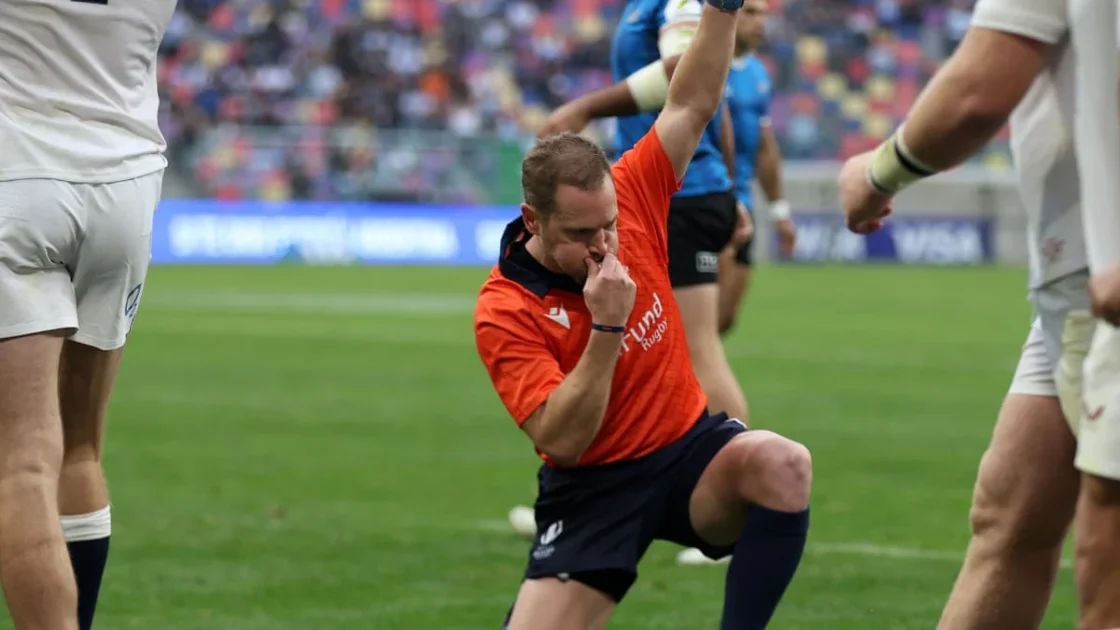
The top rugby union referees gathering for the Nations Championship might easily be mistaken for airline pilots due to their slim, studious, and calm demeanors. However, once in matchday kit, these officials frequently face harsh criticism online and from crowds, despite managing complex games under intense pressure.
The Challenge of Labyrinthine Laws
According to Sport | The Guardian reporting, spending time with elite referees such as Karl Dickson, Luke Pearce, Angus Gardner, Ben O’Keefe, and Hollie Davidson reveals the immense preparation required before every match. Officials must run at least nine kilometres while performing geometry-level calculations, explaining pivotal television decisions, and ignoring the noise of 80,000 spectators.
Rugby’s notoriously complex lawbook was the focus of a key session near Windsor on Monday, which centered on the internal mechanics of the scrum. Jonathan Humphreys, a former Wales captain and World Rugby’s scrum consultant, demonstrated the vital importance of preventing loosehead props from tucking their inside shoulders before engagement, which skews the entire front row.
The session featured a cameo from former British & Irish Lions head coach and current World Rugby coaching consultant Warren Gatland, who came up from the back of the room to bind on to Humphreys and demonstrate the precise shoulders-back position officials should mandate.
Officials also reviewed the hooker’s brake foot, which stabilizes the scrum. If the heel of the hooker’s front foot is not flat on the ground, a referee must award a free-kick.
Pursuing Consistency and Fan Engagement
World Rugby is pushing toward a consistent balance between attack and defence with a fresh four-pillar mantra: protect the player, embrace the contest, promote continuity, and win the fan. Global realization is also growing that referees need backing to make strong decisions rather than having the game endlessly fractured by television match official interventions.
A leading official stressed a “clear and obvious” ethos for modern whistleblowing, stating, “Get what matters. The rest doesn’t matter.”
Teams must prepare for extra free-kicks and penalties early in games during the upcoming month as referees enforce updated sanctions for hip and knee drop tackles, alongside a revised head-contact process for breakdowns to reduce dangerous flying clear-outs.
Coaches Meet Referees and Future Ideas
On Sunday, virtually all the world’s leading head coaches met top referees to discuss hopes and fears for the sport’s future. Concepts discussed included special refereeing goggles to provide an aerial view of scrums and a separate specialist scrum referee to sprint on and adjudicate set pieces.
Additional research is underway using heart rate monitors to identify what fans enjoy most. Early southern hemisphere studies show heart rates soar during interceptions, line breaks, and the haka, while dull interruptions and scrum resets cause the biggest turn-offs.
Recent statistics indicate that the ratio of tries scored compared to penalty goals in major Tests has trebled in less than three years, with debates on the shape of the game expected to reignite after the 2027 World Cup.
The next time spectators are tempted to shout criticism from afar, they should remember that referees know what they are doing, keeping in mind the timeless mantra: no referee, no game.