Table of Content
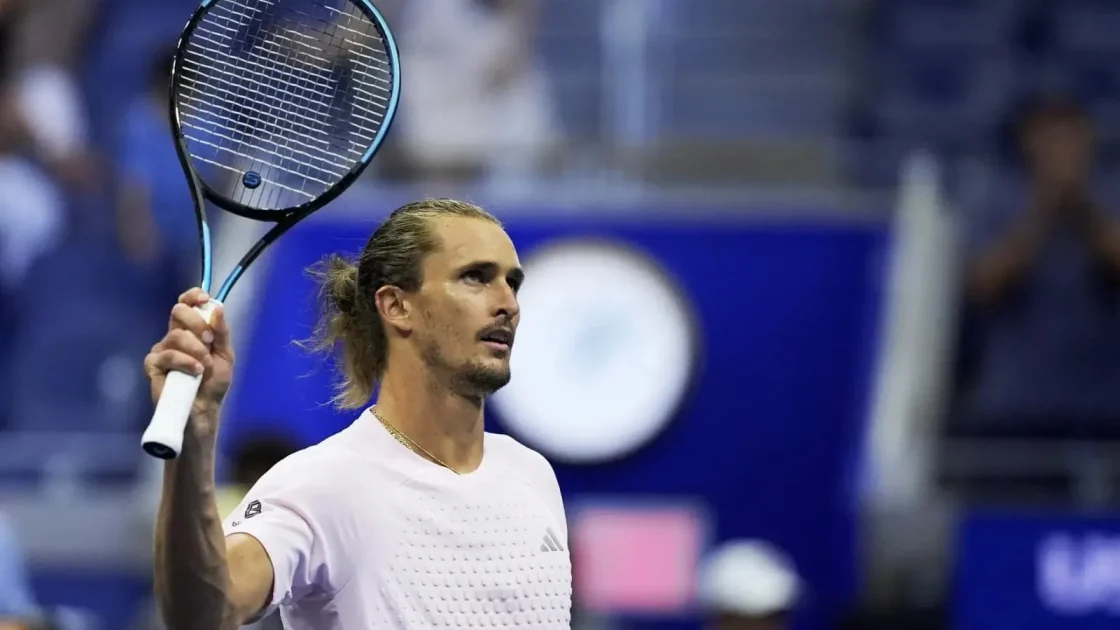
Alexander Zverev has won two Grand Slam titles in 2026, reached another Major final at Wimbledon, compiled a remarkable 25-2 record at Grand Slams, and secured the year-end World No. 1 ranking. By almost any conventional measure, it has been the greatest season of his career.
And yet there is a rather awkward stat lurking beneath all those achievements. As of November 2026, Zverev had won only three of his 11 matches against Top 10 opponents this year, while his record against Top 5 players stood at zero wins and six defeats.
A Historic Statistical Anomaly
That is a rather extraordinary performance for someone who has already secured the year-end No. 1 ranking. A historical comparison published by TennisDB found that Zverev’s 27.3% winning rate against Top 10 opponents was the lowest among year-end No. 1 seasons since ATP rankings began in 1973.
Even Stefan Edberg, whose 1991 season produced a disappointing 5-8 record against elite opposition, won a greater proportion of those matches, yet Zverev has won two Grand Slams. So how can the same player be extraordinarily successful across the biggest tournaments while struggling so badly against the world’s strongest opponents?
Mastering the Art of Winning Winnable Matches
There is one stat that explains much of Zverev’s season, which is that he won 25 matches at Grand Slams and lost only two. That represents an extraordinary level of consistency across the four most important tournaments. His Roland Garros title contributed 2,000 ranking points, while the US Open provided another 2,000, his Wimbledon final added 1,300, and the Australian Open semifinal supplied 800. That equals 6,100 points from just four tournaments, making up approximately 65% of his pre-Turin Race total.
At Roland Garros, Zverev finally ended his long wait for a Grand Slam title by defeating Flavio Cobolli in five sets, and three months later, he beat Ben Shelton in the US Open final. Both required considerable skill, physical endurance, and the ability to manage important moments, because nobody wins 25 of 27 Grand Slam matches by accident.
However, examining those achievements reveals another perspective. At the US Open, Zverev reached the final without facing a Top 20 seed, with his first genuinely elite opponent arriving in the championship match, while at Roland Garros, Cobolli was playing his first Grand Slam final. Zverev simply took advantage of the opportunities available to him, which is precisely what champions are supposed to do, though it illustrates why collecting ranking points and consistently defeating elite opposition are not identical accomplishments.
Tennis tournaments reward progression through a draw and do not award additional ranking points simply because a player defeats the World No. 2 rather than the World No. 42. If a higher-ranked opponent loses early, the remaining players still receive the same ranking rewards for advancing, and throughout 2026, Zverev has proved exceptionally good at advancing.
His service games have been particularly reliable, with Tennis Abstract recording a hold rate around 90% across the season. His backhand remains outstanding, while his movement and defensive consistency make him extremely difficult for lower-ranked opponents to break down.
The Difference Between Being No. 1 and Being the Best Player
There is a tendency to assume that the World No. 1 must also be the strongest player in direct competition, but rankings do not work like that. They reward accumulated results across a defined period, and in 2026, availability mattered enormously. Jannik Sinner has not competed since winning Wimbledon because of a knee injury, and Carlos Alcaraz missed several months, including Roland Garros and Wimbledon, because of a wrist problem.
Zverev, meanwhile, remained active and consistently accumulated points. That difference in participation helped him establish an enormous advantage in the Race, but it does not necessarily mean he would be favored against either player in a hypothetical match. In fact, performance-based ratings suggest otherwise, as Tennis Abstract’s Elo calculations placed Zverev behind both Sinner and Alcaraz in late October. While those ratings are not official ATP rankings, they attempt to measure competitive strength through match results rather than tournament-point accumulation and help explain the apparent contradiction.
Zverev has been the most accomplished player of 2026, but that does not automatically make him the most formidable. There is also a tactical explanation, because against lower-ranked opponents, Zverev can often rely on his first serve, backhand consistency, and exceptional ability to extend rallies. He is difficult to overpower and rarely provides inexpensive opportunities, but Sinner and Alcaraz are unusually effective at attacking those same patterns. Sinner takes the ball early, denying Zverev the time he normally enjoys, while Alcaraz can introduce changes of pace, angles, and net approaches that prevent the German from settling into comfortable exchanges.
Zverev’s forehand has improved, but it remains less naturally destructive than the primary attacking weapons of those rivals, and when elite opponents consistently pressure him, the difference becomes more noticeable. His recent loss to Alex de Minaur in Vienna offered another example of his difficulties against strong opposition, proving the broader pattern is difficult to dismiss. Zverev has become extraordinarily reliable at winning matches against players he is expected to beat, but he has been much less effective at consistently defeating those who can match or exceed his level, creating an unusual combination for a year-end No. 1.
Zverev’s 2026 season deserves recognition, as two Grand Slam titles, another major final, and the year-end No. 1 ranking represent extraordinary achievements, but the stats also reveal a distinction that tennis fans sometimes overlook. Being the most successful player across an entire season is not necessarily the same as being the strongest player in any individual matchup, meaning the real question is whether he can start beating the players who still look better than him.