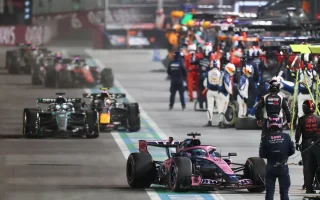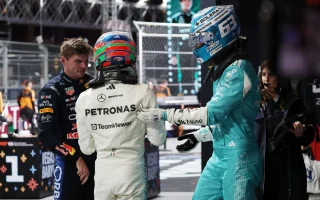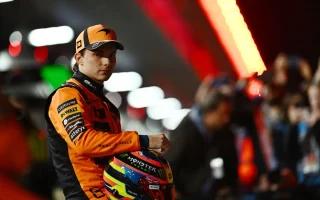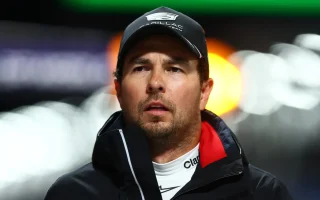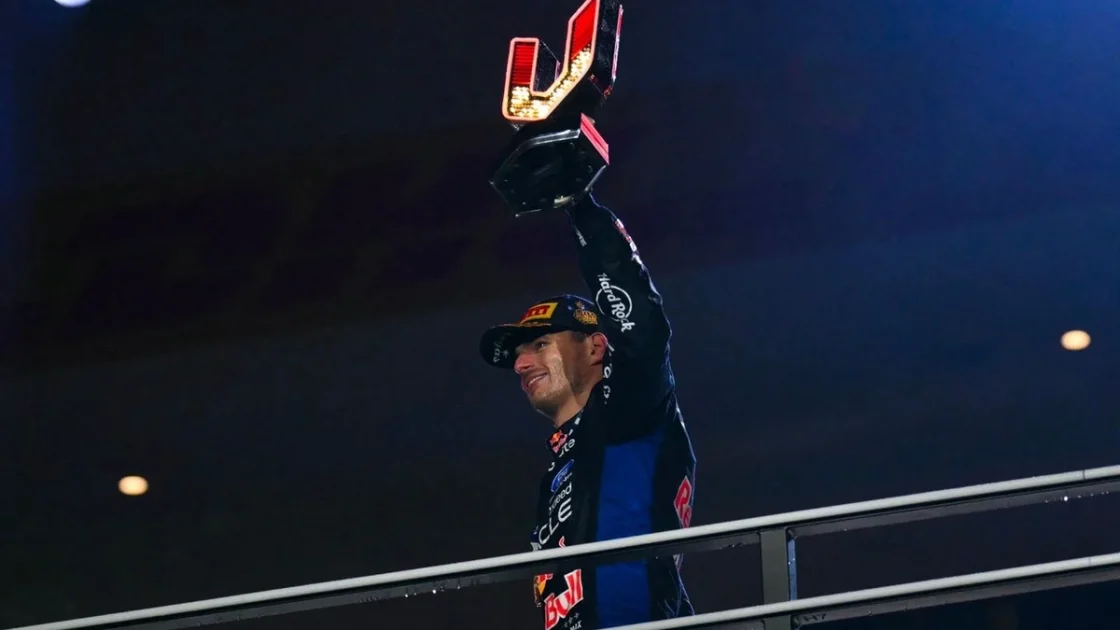
Max Verstappen recently claimed his fourth victory in the last six Formula 1 Grands Prix by winning the Las Vegas Grand Prix. The triumph came at a venue known as an energy-poor circuit, which is notable because Red Bull Ford Powertrains faced struggles at such locations earlier in the year.
Mastering Energy Management and Strategy
While the victory in Las Vegas might suggest major progress in power unit development, Red Bull team principal Laurent Mekies emphasized that the result was primarily driven by Verstappen’s tactical brilliance in handling energy management and a powerful slipstream. Speaking to Motorsport.com, Mekies explained that the reigning champion completely outmaneuvered his rivals.
Mekies stated that Verstappen outsmarted the opposition through his defensive driving across 50 laps. He noted that although Verstappen was overtaken multiple times, the driver likely executed some of those moves intentionally to explore every possible scenario between the second-to-last corner and the finish line.
Verstappen’s ability to think ahead particularly amazed the team. With ten laps remaining, the driver contacted the pit wall to discuss energy deployment scenarios for the final lap to prevent being overtaken before the checkered flag. When the team reviewed the situation, they realized Verstappen had already explored all options and mastered the strategy on his own.
Adapting Tactics on the Strip
Mercedes faced issues in the final stages as George Russell went straight on to remove himself from contention, while Kimi Antonelli experienced power unit confusion when lifting off the throttle. Despite these developments, Mekies praised the victory as one of Verstappen’s finest drives of the season, highlighting his ability to resist pressure for a prolonged period.
The aspect that left Red Bull speechless was how Verstappen independently optimized his energy management. On the Strip, he purposefully allowed competitors to pass him so he could recharge his battery before fighting back on the straight leading to Turn 1. Once Mercedes adapted to this tactic, Verstappen shifted his strategy and executed counterattacks at Turn 3 instead.
Mekies pointed out that Verstappen continually surprises the pit wall during every race. He remarked that the driver operates on a completely different level.
Due to the tactical nature of the race regarding energy deployment and slipstreams, Mekies admitted that the event did not provide a definitive answer on where Red Bull Ford Powertrains stands in terms of raw performance on energy-poor circuits. He noted that the high slipstream effect made it difficult to draw firm conclusions about race pace against the competition.