Table of Content
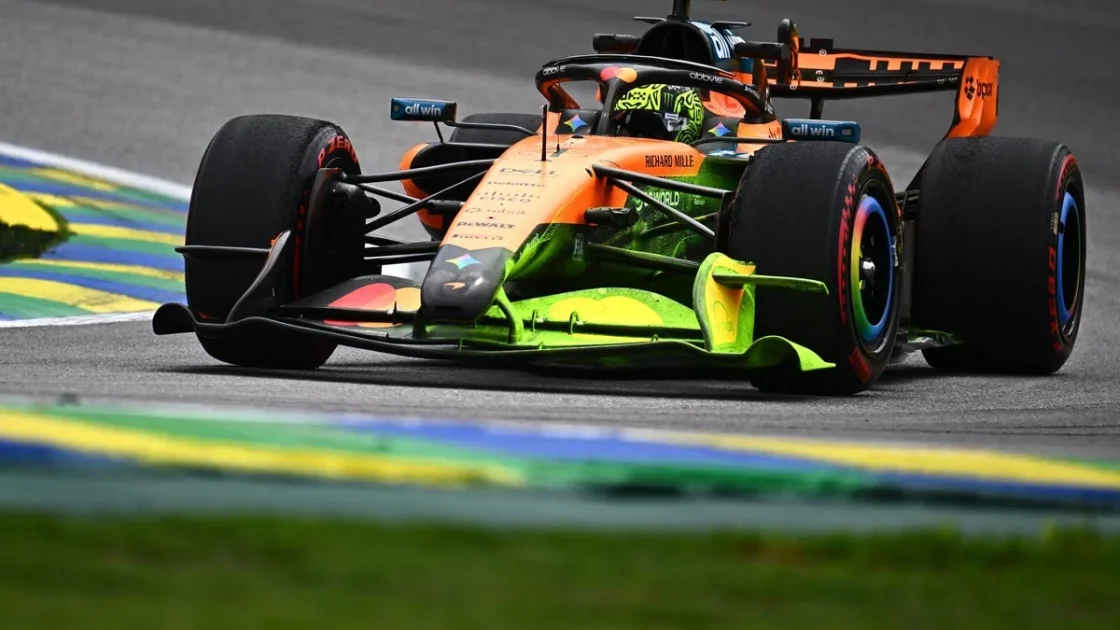
McLaren team principal Andrea Stella stated that the 2027-spec front wing concept introduced on the MCL40 at Formula 1’s Brazilian Grand Prix has enhanced the driveability and predictability of the car.
Upgrades and Dry Practice Performance
The Woking-based team brought an upgrade package to Interlagos, which included a new front wing, a rear wing, a beam wing, and new floor furniture, following a period where McLaren lost ground to Mercedes, Ferrari, and Red Bull over recent months.
Lando Norris secured pole position at Autodromo Jose Carlos Pace, while team-mate Oscar Piastri finished 12th in a qualifying session impacted by heavy rain, which meant the wet conditions did not fully reflect the performance of the new components. However, practice sessions held on a dry track enabled the team to properly analyze the impact of the updates.
Driver Feedback and Future Car Development
Stella explained that while previous trackside upgrades primarily focused on increasing aerodynamic load without altering driveability, the latest front wing specifically aimed to make the car easier to handle.
Based on driver comments and measured data, Stella noted that the wing performed as expected and made the car’s driveability slightly easier. He cautioned that a gap remains between achieving marginally easier driveability and having a fully easy car to drive, an area the team is addressing for next year’s vehicle, adding that these precursor upgrades are functioning as intended.
Upcoming Components in Las Vegas
Additional updates are scheduled for the next grand prix in two weeks, as Stella announced the arrival of new parts in Las Vegas.
The upcoming components will be adapted to the airflow generated by the front wing, which Stella identified as the primary component for improving vehicle predictability and driveability. While these additions will provide more aerodynamic efficiency, they are not expected to significantly alter the car’s overall behavior, which will require developments planned for next year.
Sao Paulo Grand Prix Outlook
Regarding the Sao Paulo race, Stella expressed uncertainty over whether polesitter Norris could maintain his advantage. He praised Norris as a rainmaster following his qualifying performance, but conceded that Mercedes driver George Russell appeared intrinsically quicker in Q3, noting that dry conditions would not favor McLaren.
Mercedes appeared to be a step ahead in dry practice sessions, according to Stella, who pointed out that Kimi Antonelli was very fast in practice and concluded that despite recent car improvements, McLaren does not currently possess the best race pace.