
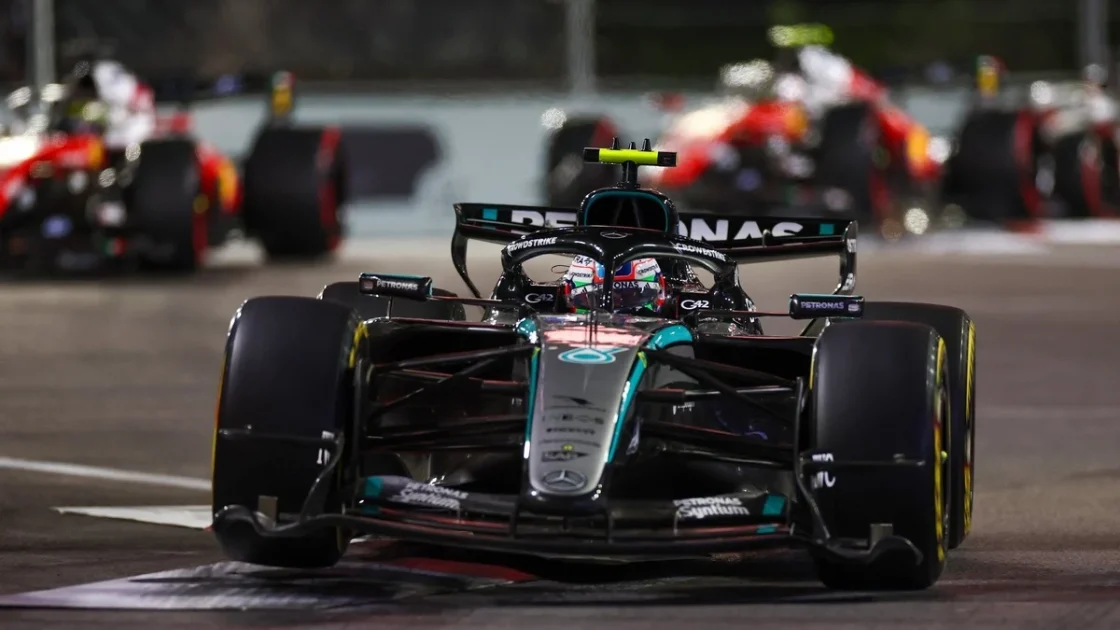
Kimi Antonelli has revealed the specific driving error that derailed his challenge for victory in a thrilling Las Vegas Grand Prix. The newly crowned world champion battled his way through the field after starting sixth due to a five-place grid penalty for an engine change, eventually finding himself fighting at the front of the race.
The Battle for the Lead and the Fatal Lift
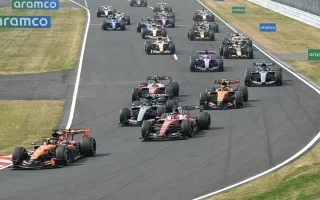
Antonelli was the only driver in the top ten to start on medium tires rather than softs, which dropped him another two spots on the opening lap. By lap 17, the Mercedes driver had recovered to fourth and joined polesitter Max Verstappen and teammate George Russell in a fierce contest for the win.
The Italian driver traded the lead with Verstappen multiple times in a strategic style of racing, crossing the finish line just 0.001 seconds ahead on lap 43. Hoping to position himself for a decisive overtake on the final lap, Antonelli held back from attacking the Red Bull at the end of the penultimate tour. However, the tactical decision backfired and ultimately dropped him behind both McLarens to finish fourth.
Speaking to Autosport, Antonelli explained that his attempt to stay directly behind his rival created a critical electronic issue. He stated that lifting off the throttle before Turn 14 to save overtake mode triggered a system glitch that left him with zero battery power exiting the corner.
Elaborating further to Autosport, Antonelli noted that his mistake was lifting off and then reapplying a small amount of throttle to maintain speed, which prevented the car from harvesting energy. He lost nearly two seconds down the straight as a result.
Straight-Line Speed and Tactical Racing
Addressing suggestions that Mercedes was losing out to Red Bull on the straights, Antonelli clarified that his team actually held a top-speed advantage thanks to a lower downforce setup, reaching 320.6km/h compared to Red Bull’s 314.3km/h. Although this configuration made cornering more difficult, he noted that the team had a plan ready for the final lap that he was ultimately unable to execute.
Reflecting on the strategic yo-yo style of racing, Antonelli admitted that managing the varying speeds on the straights was stressful and required constant tactical awareness. Despite the frustrating finish caused by the system error, the Italian driver described the event as an enjoyable race.