Table of Content
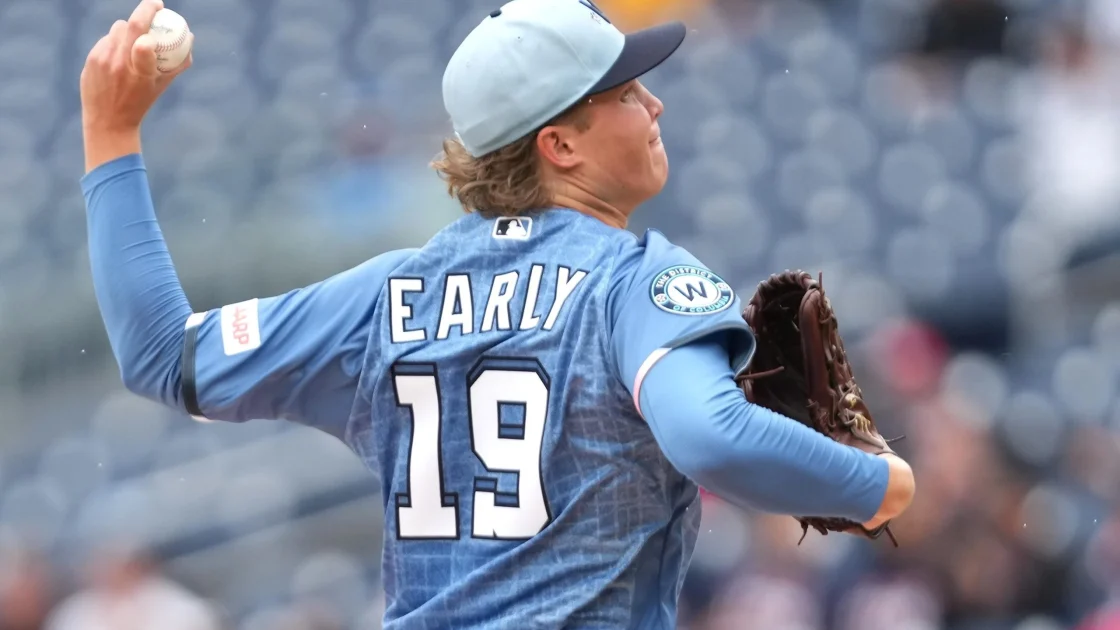
Paul Toboni made several moves during his first trade deadline, but the most significant one involved trading with his former organization. As reported by sports.yahoo.com, he capitalized on Curtis Mead’s strong first half to acquire standout 24-year-old left-hander Connelly Early from the Boston Red Sox.
A Trade Reuniting Familiar Faces
Toboni drafted Early while in Boston, and the two are now reunited in Washington. Before the 2026 season began, trading Mead straight up for Early would have seemed unlikely, as Mead had been designated for assignment by the White Sox before Opening Day before the Nationals acquired him. Early, meanwhile, had impressed during a September call-up and started a crucial elimination game.
The one-for-one deal took place approximately a week before the trade deadline. Early was performing well in Boston, posting a 3.44 ERA with 93 strikeouts across 91.2 innings, establishing himself as a reliable rookie middle-of-the-rotation starter despite some mildly concerning underlying metrics.
Injury Concerns and the 2026 Season
At the time of the trade, Early was sidelined with elbow soreness after leaving a start against the Nationals at the end of June. An MRI revealed no structural damage, meaning the injury would not keep him out long-term. Boston ultimately traded Early for Mead to address their need for offense while managing a surplus of left-handed starters.
Neither team received significant contributions on the field from the trade in 2026. Mead suffered a broken wrist after being hit by a pitch in his second at-bat, missing the remainder of the season. Meanwhile, Early experienced a forearm discomfort setback while ramping up to return in August, prompting the Nationals to shut him down temporarily.
The discomfort proved minor, and the Nationals carefully built Early back up to pitch by the end of the year. Following a few rehab outings, he made a start in the second-to-last game of the season.
A Promising Return and Pitching Arsenal
During a brief three-inning appearance, Early demonstrated full command of his six-pitch mix—consisting of a four-seamer, sinker, changeup, curveball, sweeper, and slider—keeping New York Mets hitters off balance. He surrendered just one hit, issued no walks, and cruised through three frames on only 34 pitches.
For the entire 2026 campaign, Early recorded a 3.33 ERA over 94.2 innings with 94 strikeouts. While peripheral metrics suggested his ERA might normally sit in the low-to-mid 4s, he managed to overachieve and could repeat that 3.33 ERA sustainably moving forward.
Early combines strong stuff, feel, and command, utilizing a four-seam fastball that sits at 94 mph alongside a variety of effective secondary offerings. His fastball features strong shape that makes up for average velocity, though additional strength training could potentially add velocity and improve durability.
Having never pitched more than 103 innings in his professional career, durability remains a slight question mark following his months-long injury absence. However, successfully returning to the mound before season’s end provides optimism for the future.
Early is expected to serve as the ideal number three starter for the Nationals, forming a formidable rotation core alongside Cavalli and another major arm. The Nationals entered the deadline needing pitching assistance, and Connelly Early is positioned to be a core part of that solution moving forward.