Table of Content
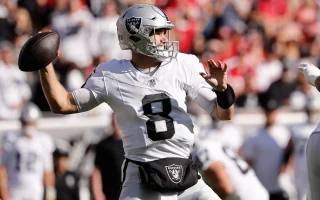
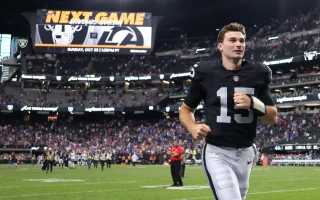
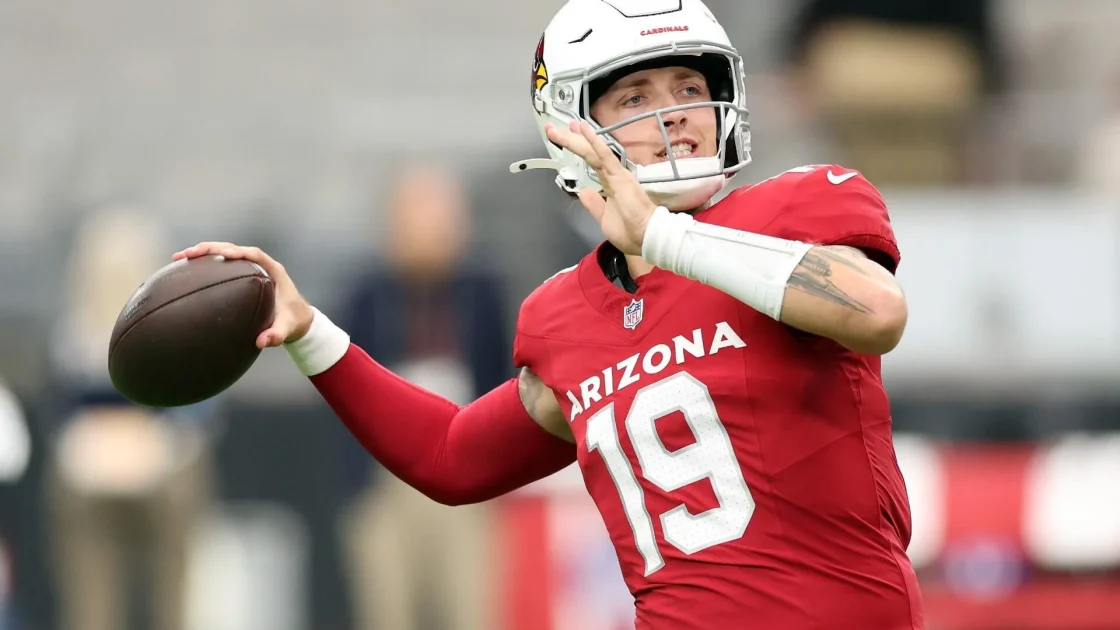
The Arizona Cardinals are turning their offense over to third-round rookie Carson Beck following a series of sudden changes at the quarterback position. After trading Jacoby Brissett to the Baltimore Ravens and losing Gardner Minshew to a potential season-ending elbow injury, Beck is set to make his NFL debut against the Los Angeles Rams this Sunday.
A High-Stakes Evaluation Window
Selected 65th overall in the draft, Beck now has eight regular-season games to demonstrate whether he can be Arizona’s long-term answer under center. Sitting at 3-6, the Cardinals currently align for a top-10 selection in next spring’s draft, giving Beck an immediate opportunity to convince the organization not to spend that high pick on another quarterback.
During his collegiate career at Georgia and Miami, Beck started 43 games and earned a reputation as a quick processor. As reported by CBS Sports, Beck recorded a 38.6% first-down rate in college, ranking in the 95th percentile among draft-eligible quarterbacks from 2015 through 2026. However, he was pressured on just 19.1% of his dropbacks—the lowest rate for any draft prospect in over a decade—and screen passes accounted for more than 32% of his throws, leaving questions about how he will handle pressure in the NFL.
Historical Precedent for Late-Season Rookie Starts
League history highlights the difficulty faced by late-round rookies thrown into action late in the year. Since 2007, 24 quarterbacks drafted in the third round or later have made their first NFL start after Week 7 of their rookie season. Out of those 24 players, only eight managed to start at least four games as rookies.
Among those eight, just three—Nick Foles, Desmond Ridder, and Brock Purdy—started eight or more games in their second season, alongside Sam Howell, who achieved that milestone despite starting fewer than four games as a rookie. While Purdy established himself as a high-level starter in San Francisco, others like Ridder were eventually replaced after their teams drafted high-round quarterbacks in subsequent drafts.
The Cardinals have navigated similar scenarios in the past. Injuries compelled Arizona to start rookies John Skelton in 2010 and Ryan Lindley in 2012. Instead of drafting replacement quarterbacks with top choices the following springs, Arizona picked cornerback Patrick Peterson fifth overall in 2011 and guard Jonathan Cooper seventh overall in 2013, choosing instead to address the quarterback position by trading for veterans Kevin Kolb and Carson Palmer.
The Blueprint and the Challenge Ahead
A recent comparison for Beck’s situation is New Orleans Saints quarterback Tyler Shough. After taking over as the Saints’ starter in Week 9 of 2025, the 40th overall pick completed nearly 68% of his passes while guiding New Orleans to a 5-4 record down the stretch. That performance convinced the Saints to pass on quarterbacks in the 2026 draft and select wide receiver Jordyn Tyson at No. 8 overall instead.
Arizona’s offensive setup under head coach Mike LaFleur features elements that could favor Beck. TruMedia data shows that Arizona attempts 58.8% of its passes within five yards of the line of scrimmage, while its offensive line has allowed pressure on 31.1% of dropbacks—the fifth-lowest rate in the league. However, the Cardinals rank 28th in yards per play, placing the burden on Beck to turn quick throws into consistent scoring drives.
Preseason projections published by CBS Sports targeted Beck for 6.9 yards per attempt and an 85.8 passer rating. Beyond the statistics, the upcoming two months will test how Beck responds when defenses force him off his first read as the Cardinals look for stability for a franchise seeking its first winning season since 2021.