Table of Content
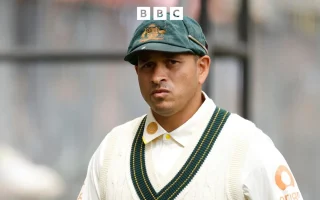
The issue of ball tampering has returned to the sporting headlines after Australia batter Usman Khawaja revealed in his autobiography that the entire team knew about the infamous 2018 “Sandpapergate” scandal. Khawaja’s revelation reopens discussions from the Test series against South Africa, where Cameron Bancroft was caught on field using sandpaper to illegally alter the condition of the ball.
The 2018 Sandpaper Scandal and Sanctions
At the time of the 2018 incident, Bancroft was identified with the sandpaper, leading to sanctions for him, vice-captain David Warner, and captain Steve Smith by Cricket Australia. Bancroft received a nine-month suspension, while Warner and Smith were each banned for a year, sparking widespread moral panic in Australia and bewilderment globally.
Despite the heavy national federation penalties, the official International Cricket Council (ICC) sanctions were significantly milder. Smith received a two-Test ban and a full match-fee fine, Bancroft was fined 75 per cent of his match fee without a suspension, and Warner faced no official punishment.
According to Latest Headlines – The Athletic (nytimes.com), altering the condition of the ball is definitively against the laws of cricket, yet there is an implicit acceptance that players across all levels have engaged in or witnessed the practice. Comparable to minor tax infractions or using pine tar in baseball, most players who tamper with balls do so discretely to avoid detection.
Law 41 and Long-Standing Tactics
Under Law 41 for unfair play, players may polish the ball on clothing, remove mud, or dry it with an umpire-approved cloth if wet. Using spit was banned during the Covid-19 pandemic, though sweat remains permitted, yet players have historically utilized a wide range of foreign objects and tactics.
Current Australia captain Pat Cummins detailed various methods during a press conference, mentioning super glue on brandings, zippers, super glue on wicketkeeper gloves, layers of nail polish, and Murray Mints. Cummins noted that while he had heard claims about taped sandpaper, he had only ever personally witnessed a bottle cap used in a domestic Sheffield Shield game.
The most basic tampering method involves scratching one side of the ball with a fingernail to make one side smooth and the other rough, helping the ball swing. Fast bowler Waqar Younis became the first player suspended for this in 2000 against South Africa, receiving a one-match ban and a fine. Fingernails have also been used to lift the seam, as seen with Sachin Tendulkar in 2001 before a threatened boycott lifted his sanction.
Body Parts, Kit, and Foreign Objects
Players have also used various body parts and kit items, such as Shahid Afridi biting the ball during a 2010 T20 international against Australia, initially claiming he was merely trying to smell it before admitting he wanted to help his bowlers. Faf du Plessis was caught using his trouser zip to rough up the ball in a Test against Pakistan, resulting in penalty runs and a fine, while Stuart Broad stood on the ball with his bowling boot spikes in 2010.
More creatively, foreign objects have been introduced to make one side smooth, such as combining sugar with saliva—a technique used in English county cricket and the 2005 Ashes, as admitted by Marcus Trescothick. Du Plessis was also penalized in 2016 for applying saliva while sucking a mint, defending the action by telling reporters, “There’s two ways of looking at it: either ball shining or ball tampering.” Other historical instances include John Lever and Vaseline in 1974, Mike Atherton and pocket dirt in 1994, and Imran Khan using a bottle cap.
As these diverse methods demonstrate, while tampering remains illegal, the widespread and creative nature of the practice ensures it continues to surface in cricket history.