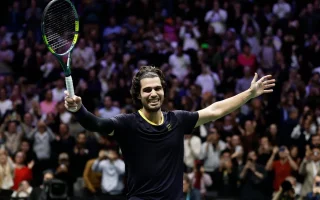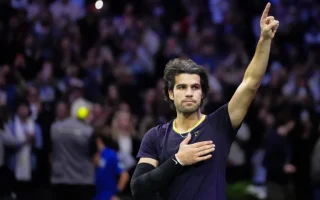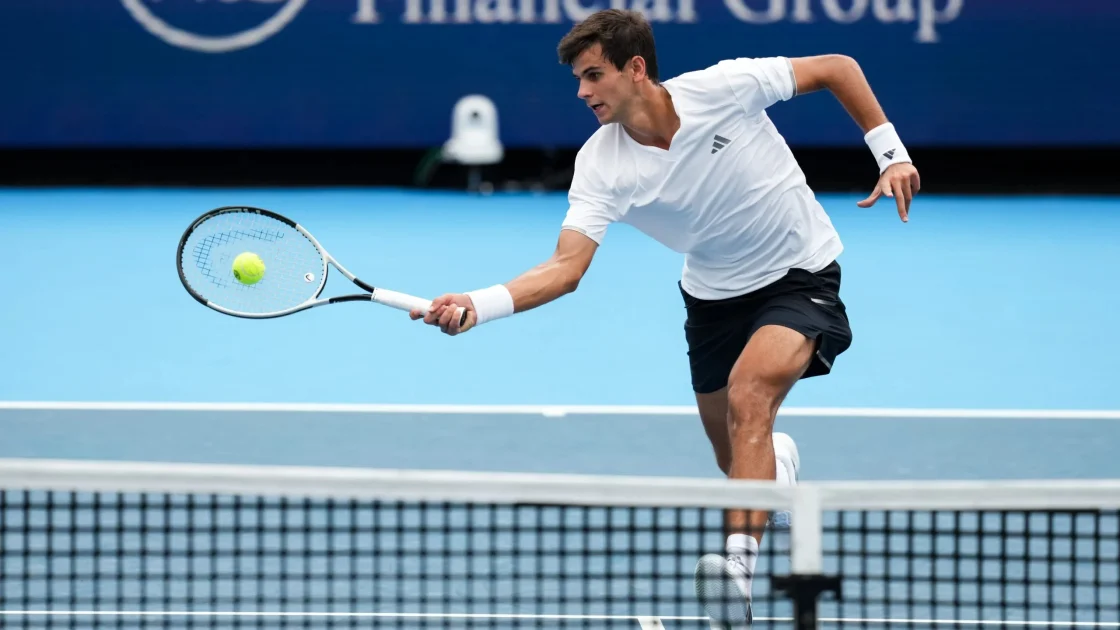
The eight-man field for the 2026 ATP Finals is officially complete, showcasing a wide variety of paths players can take to reach the prestigious season-ending event outside the Grand Slams. Alexander Zverev tops the Race standings with an impressive 9,350 points, nearly triple the total of Rafael Jodar, who grabbed the final spot with 3,234 points. Meanwhile, Jannik Sinner amassed 7,950 points but will miss the tournament due to injury, allowing the Spanish player to enter.
The Established Contenders
Alexander Zverev dominated the competition, collecting a remarkable 6,100 points at Grand Slams, which accounts for roughly 65 percent of his overall season total. His triumphs at Roland Garros and the US Open delivered 4,000 points, complemented by a Wimbledon runner-up finish worth 1,300 points and an Australian Open semifinal appearance worth 800 points. Although he did not capture a Masters 1000 title, his overwhelming dominance at the majors made it unnecessary.
Carlos Alcaraz took a different path by winning the Australian Open for 2,000 points, though injuries forced him to miss both Roland Garros and Wimbledon. He added 400 points from a US Open quarterfinal and secured three ATP 500 titles worth 1,500 points. Competing in only ten tournaments that contributed to his Race total, Alcaraz demonstrated how quickly an elite player can accumulate points by consistently reaching tournament deep rounds.
Ben Shelton relied heavily on two major results: winning the Canadian Open for 1,000 points and reaching his maiden Grand Slam final at the US Open for 1,300 points. These performances made up nearly 47 percent of his tally, which was further boosted by two ATP 500 titles and 400 points apiece from the Australian Open quarterfinals and Paris semifinals. Playing a full schedule of 21 contributing tournaments, the American secured his second consecutive ATP Finals berth.
Daniil Medvedev offered a stark contrast to Zverev by earning just 510 points across all four Grand Slams yet still qualifying comfortably. His key results included a runner-up finish at Indian Wells worth 650 points, semifinals in Rome and Shanghai worth 400 points each, and four titles outside the majors and Masters level that added 1,250 points.
The Four First-Time Qualifiers
Flavio Cobolli built his campaign around a runner-up finish at Roland Garros worth 1,300 points and a Wimbledon quarterfinal worth 400 points, meaning nearly half his points came from just two majors. Additional contributions included an Acapulco title worth 500 points, a Cincinnati semifinal worth 400 points, and an ATP 500 final appearance worth 330 points.
Arthur Fils achieved perhaps the most unconventional qualification profile by earning only 60 points at Grand Slams, highlighted by a third-round appearance at Wimbledon and ten points at the US Open. Instead, outstanding Masters 1000 performances powered his entry, led by a Cincinnati title worth 1,000 points, semifinals in Miami and Madrid worth 400 points each, and 400 combined points from Indian Wells and Canadian Open quarterfinals.
Frances Tiafoe depended on a select group of standout results, including a US Open semifinal worth 800 points, a Cincinnati final worth 650 points, a Halle title worth 500 points, and an Acapulco final worth 330 points. These four tournaments yielded 2,280 points—about 67 percent of his total—compensating for a lack of consistency during the rest of the season.
Rafael Jodar secured his debut appearance through strong Masters 1000 showings, led by a Shanghai runner-up finish worth 650 points and a Canadian Open semifinal worth 400 points. Quarterfinal runs in Madrid, Rome, and Roland Garros added another 1,050 points. He finished merely 64 points ahead of the first alternate, Alex de Minaur, marking a monumental achievement for a player who started the year ranked outside the top 150.
The diverse qualification routes highlight that there is no singular formula to reach Turin, proving that players can succeed through Grand Slam dominance, steady accumulation at smaller events, or explosive runs at high-value tournaments.