Table of Content
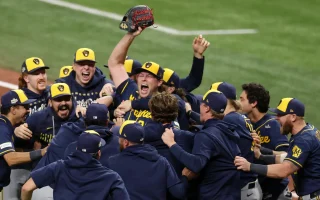
Following the Milwaukee Brewers’ World Series victory, Major League Baseball’s 2026-27 offseason is officially underway with more than 100 players hitting free agency. Teams now face critical decisions regarding player options and qualifying offers ahead of upcoming deadlines.
Understanding the Qualifying Offer
The qualifying offer allows teams to receive draft-pick compensation if they lose a departing free agent to another club. Set as a one-year contract matching the average of the top 125 salaries in baseball, the qualifying offer has reached a record $23.15 million for the upcoming offseason, as reported by the New York Post. This figure continues an upward trajectory from $22.025 million last year, $21.05 million two years ago, and $20.325 million three years prior.
Clubs must tender qualifying offers to eligible free agents within five days of the World Series conclusion. Players who receive the offer have until 4 p.m. ET on Nov. 17 to decide whether to accept or decline. Accepting players stay with their current club and cannot be traded without permission until June 15, while those who reject it enter free agency attached to draft-pick compensation.
The system remains active despite the current collective bargaining agreement expiring at 11:59 p.m. ET on Dec. 1. Future labor agreements could alter or eliminate the rule, but all qualifying offer decisions must occur before the current CBA lapses.
Compensation and Penalty Rules
Rules for draft-pick compensation vary based on a franchise’s revenue-sharing status and luxury tax payments. Teams receiving revenue sharing with under $50 million get a pick after competitive balance round B, whereas those with $50 million or more receive a pick after the first round. Clubs paying the competitive balance tax receive picks after the fourth round, and teams in neither category follow separate guidelines.
Signing a qualified free agent also incurs penalties for teams depending on their financial bracket. CBT-paying teams forfeit their second- and fifth-highest selections, plus $1 million, while revenue-sharing recipients surrender their third-highest selection. Teams in neither group face a $500,000 penalty and sacrifice their second-highest selection.
Last offseason saw 13 players receive qualifying offers. Trent Grisham, Shota Imanaga, Gleyber Torres, and Brandon Woodruff accepted their offers, while Zac Gallen, Michael King, and Kyle Schwarber declined but re-signed with their teams. Meanwhile, Bo Bichette, Dylan Cease, Edwin Díaz, Kyle Tucker, Ranger Suárez, and Framber Valdez rejected the offers to sign elsewhere, granting their former clubs compensation picks.
Eligibility and Top Candidates
Players are only eligible if they spent the entire 2026 season with a single team and have never received a qualifying offer before. Notable free agents missing eligibility due to mid-season trades or prior offers include Luis Arraez, Kevin Gausman, Casey Mize, Freddy Peralta, Tarik Skubal, Daulton Varsho, Bo Bichette, Sonny Gray, Michael King, and Nick Martinez.
Only two players stand out as definitive locks to receive the qualifying offer this year: Randy Arozarena of the Mariners and Seiya Suzuki of the Cubs. Both players earned salaries close to the threshold this past season—$15.65 million for Arozarena and $18 million for Suzuki—making the jump to $23.15 million manageable as they are expected to decline the one-year deals.
Three additional players emerge as strong bets to receive the offer: catcher Ryan Jeffers of the Twins, slugger Brandon Lowe of the Pirates, and starting pitcher Trevor Rogers of the Orioles. Although these players carry strong credentials from the 2026 season, their respective front offices’ historical spending habits introduce minor uncertainty.
On-the-Bubble Candidates
Uncertainty surrounding the impending expiration of the collective bargaining agreement may prompt teams to exercise caution before committing $23.15 million to a single player. Three prominent candidates sit on the borderline:
David Bednar of the Yankees turned 32 and would become baseball’s highest-paid reliever under the offer, making a multi-year extension more likely than a one-year tender. His teammate, Jazz Chisholm Jr., posted a 3.5-WAR season with solid defensive and offensive metrics, but New York may prioritize payroll flexibility over a late-round draft pick. In San Diego, reliever Adrian Morejon represents a fascinating test case for new ownership given his elite production at age 28, though the high salary tag complicates the decision.