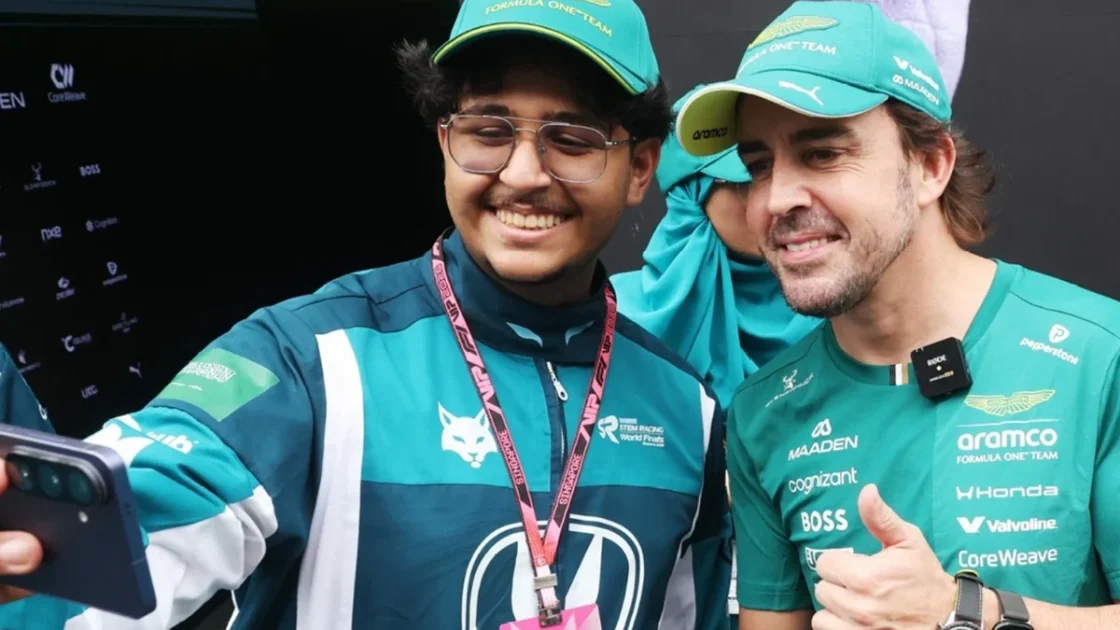
Formula 1 has published its first sport-wide Social Impact Report, detailing how more than half a million young people worldwide benefited from its initiatives last year. The programmes, introduced in 2025, aimed to educate, inspire, and open pathways into the sport for youngsters across 71 countries.
Engineering Scholarship Programme Renewed
Alongside the report, F1 has renewed its Engineering Scholarship programme for three academic years with an investment of over £2.4 million. Established in 2021, the initiative helps students overcome financial and accessibility barriers in higher education, having already supported 48 students.
Ten new scholars each year will receive full tuition fees and living costs coverage between the 2026/27 and 2028/29 academic years. The participating institutions include the University of Strathclyde, Imperial College London, the University of Cambridge, the University of Oxford, and MUNER in Italy.
Social Impact Findings
The new report brings together the contributions of F1, governing body the FIA, all 10 teams, and 24 race promoters during the 2025 season. The initiatives were developed following recommendations from The Hamilton Commission, which was launched in 2021 by seven-time world champion Lewis Hamilton and the Royal Academy of Engineering.
Key highlights from the report include over 500,000 young people gaining global access to the sport through education and STEM programmes, and 100% of Diversity and Inclusion Charter signatories delivering social impact programmes. Additionally, the report notes over 1,000 skills and talent development opportunities, more than 29,000 schools competing annually in the STEM Racing global education initiative, and over 700 schools participating in the British Council’s Learning Sectors education programme across the UK, South Africa, India, and Brazil.
Further achievements feature more than 2,500 young people participating in activities at F1 events, over 50 wishes granted through a partnership with Make-A-Wish, and 140 young people attending F1 Academy workshops.
Leadership Responses
F1 CEO Stefano Domenicali stated that Formula 1 possesses an extraordinary power to inspire and wants everyone to feel they have a place in the sport. Domenicali mentioned that the organization is turning commitments into action to break down barriers and widen access for future generations, while expressing gratitude to Lewis Hamilton, the Hamilton Commission, the FIA, teams, race promoters, partners, and supporting organizations.
Domenicali added that by extending the engineering scholarship and investing in youth and communities, F1 will open doors, nurture talent, and inspire the next generation. FIA president Mohammed Ben Sulayem stated that motorsport can transform lives and that the sport carries a responsibility to ensure its benefits reach past the racetrack.
Ben Sulayem noted that the report highlights the strength of community collaboration in reaching over half a million young people, and welcomed the continued investment in education and scholarships to make motorsport more accessible and build a lasting legacy.