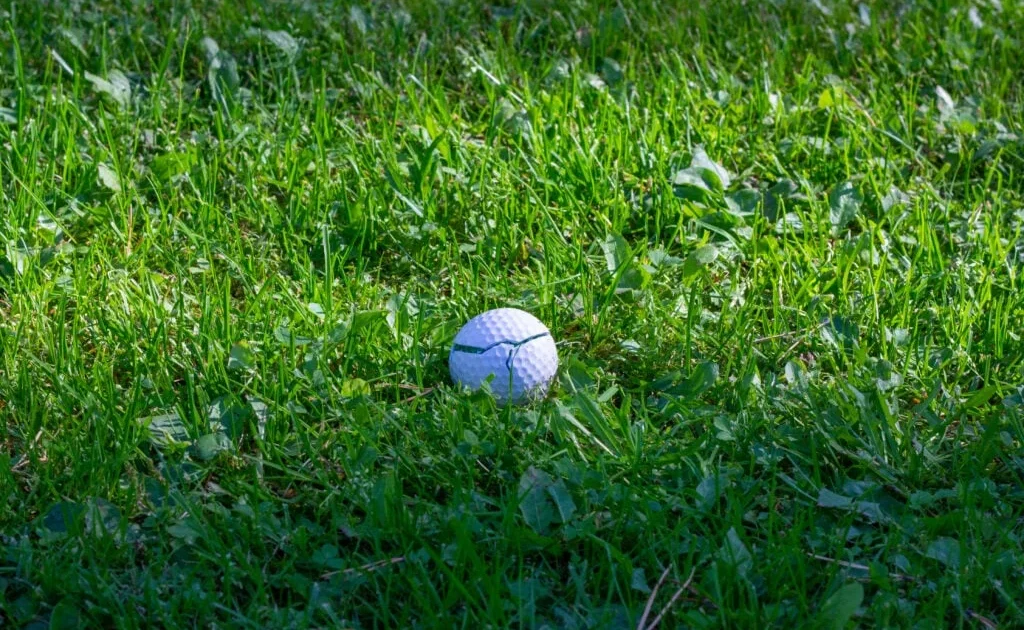
Golf balls today are much more durable than the classic balata balls of the past, but they can still occasionally become cut or damaged. The Rules of Golf provide specific guidance on what a player can do when a ball suffers structural damage during a round.
Understanding the Rules on Cracked Golf Balls
Players are permitted to lift their golf ball to inspect whether it is cut or cracked, provided they have a reasonable belief that the damage occurred during the specific hole being played. Before lifting the ball, the player must mark its exact spot or face a one-stroke penalty. Cleaning the ball is also prohibited unless the ball is resting on the putting green.
Under Rule 4.2c (2), a player may substitute another ball “only if it can be clearly seen that the original ball is cut or cracked and this damage happened during the hole being played.” Minor cosmetic issues such as scratches, scrapes, discoloration, or paint damage do not qualify for a substitution. If the ball fails to meet this damage threshold, it must be returned and played from its original spot.
Proceeding to substitute a different ball when the criteria are not met, followed by making a stroke, results in a one-stroke penalty under Rule 6.3b.
Readers with questions about golf regulations can reach out via email to s.carroll@nationalclubgolfer.com or connect through social media.