Table of Content
Formula 1 power-unit manufacturers have officially agreed to introduce 2.1-litre V8 turbo hybrid engines starting in the 2030 season. Governing body the FIA announced on Friday that all current engine builders have committed to the proposal, which replaces the current power units with a lighter, simpler, and more cost-effective architecture.
The core of the new regulations follows technical details first revealed by BBC Sport last month. The updated engines will continue to utilize advanced sustainable fuels while aiming to eliminate energy management issues that have drawn criticism from drivers under the current formula.
Engine Performance and Specifications
The 2.1-litre capacity was chosen by adding two cylinders to the existing 1.6-litre V6 blocks, a design choice intended to reduce development costs. Insiders told BBC Sport that the electrical system will feature a maximum output of 200kW, down from the current 350kW figure. Half of the electric power will be available continuously during standard running, while the remaining half will function as an overtake mode.
The internal combustion engine will generate approximately 780bhp, complemented by 270bhp from the electric motor. This configuration delivers a total output of around 1,050bhp in overtake mode and just over 900bhp during standard operation. The revised power split is designed to eliminate energy starvation on long straights, preventing instances where batteries deplete before reaching braking zones.
Under the new rules, the target weight for cars will decrease from the current 768kg to less than 700kg, excluding fuel. Power unit weight will be capped at 150kg, representing a reduction of roughly 30kg, while race-start fuel capacity will increase to between 110kg and 120kg. Additionally, an annual engine budget cap will be set at $190 million (£145 million).
Official Statements and Regulatory Background
FIA President Mohammed Ben Sulayem highlighted the consensus among manufacturers as a key step forward for the sport’s future.
“The return of V8 engines represents an opportunity to reconnect with the DNA of this championship, bringing back the sound, emotion and pure racing that is loved worldwide,” Ben Sulayem said. “Our vision is clear, lighter, simpler and more affordable cars that put driver skill at the heart of the competition.”
McLaren Racing Chief Executive Officer Zak Brown also voiced approval for the direction taken by the governing body and series officials.
“Everyone is very, very excited. I think everyone will be, [for] the power units. But there’s a lot more also going on to continue to evolve the sport. So, between the FIA and Formula 1, they’re doing a great job,” Brown stated.
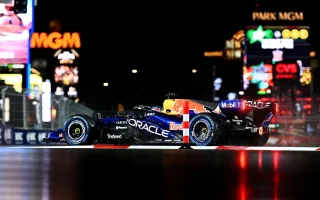
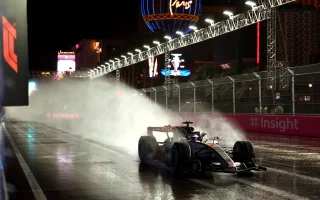
The rules outcome serves as a compromise following earlier efforts by Ben Sulayem to mandate naturally aspirated engines. Initial proposals for a V10 engine were turned down by manufacturers last year, leading to discussions centered on a V8 system. Manufacturers pushed to retain turbochargers and hybrid systems to preserve commercial relevance for road vehicles. Due to the inclusion of turbochargers, engine noise is expected to remain comparable to existing units, avoiding noise conflict issues at urban circuits such as Miami and Las Vegas.
Adjustments for General Motors
As part of the rule negotiations, General Motors will delay the introduction of its custom engine for the Cadillac team from 2029 to 2030. GM will relinquish its voting rights on current engine regulations during the interim period and will be classified as a new manufacturer upon its 2030 entry. The team will rely on Ferrari customer engines through the 2029 season.
Cadillac F1 Chief Executive Officer Dan Towriss stated that the organization had previously been working on both engine formats, giving them a established V6 baseline as work progresses toward the 2030 V8 unit.