Table of Content
The date November 15 holds a significant place in Chicago White Sox history, marked by major front office changes, Hall of Fame voting anomalies, controversial awards snubs, and historic MVP victories, as reported by sports.yahoo.com.
Front Office Departure and Hall of Fame Runoff
In 1945, Harry Grabiner resigned as the general manager of the White Sox after serving the club since 1905, when he started as a 15-year-old selling scorecards. Grabiner had run the team alongside three generations of Comiskey ownership starting in 1915 and became the de facto general manager by 1916. Although a will had guaranteed him another decade of leadership following the 1939 death of Louis Comiskey, declining health forced his departure six years early, after which he joined Bill Veeck’s ownership group in Cleveland, while Les O’Connor took over the Chicago club.
On the same day in 1945, Cooperstown attempted to clear a massive backlog of worthy players by holding a runoff election, as Hall of Fame voting occurred just once every three years. The effort failed when no candidate reached the required 75 percent threshold. Among them was legendary White Sox pitcher Ed Walsh, who finished third on the ballot with 55.5 percent of the vote, receiving 137 out of 247 votes.
Roster Changes and Rookie Controversy
In 1948, outfielder Taffy Wright was sold to Philadelphia after spending six seasons with the White Sox, interrupted by three years of military service during World War II. Wright was an above-average player in four of those six seasons and earned MVP votes three times, but after his WAR dropped to 0.5 in 1948, Chicago parted ways with him.
In 1951, White Sox outfielder Minnie Miñoso suffered a controversial defeat in the American League Rookie of the Year voting, losing to Gil McDougald of the New York Yankees by a vote of 13 to 11. Miñoso outperformed McDougald significantly in MVP voting—finishing fourth with one first-place vote compared to McDougald’s ninth-place finish—and led all serious candidates in WAR at 5.4. Furthermore, Miñoso held the highest OPS among top-10 finishers at .922, led the league with 31 steals, and surpassed McDougald in nearly every offensive category except home runs.
MVP Triumphs and Debates
In 1972, White Sox first baseman Dick Allen won the American League MVP award from the Baseball Writers Association of America after nearly capturing the Triple Crown. Allen led the league in home runs with 37, RBIs with 113, slugging percentage at .603, and walks with 99, while also pacing the White Sox with a .308 batting average, 19 game-winning RBIs, and 19 stolen bases. He secured 21 of 24 first-place votes to total 321 points, comfortably ahead of runner-up Joe Rudi.
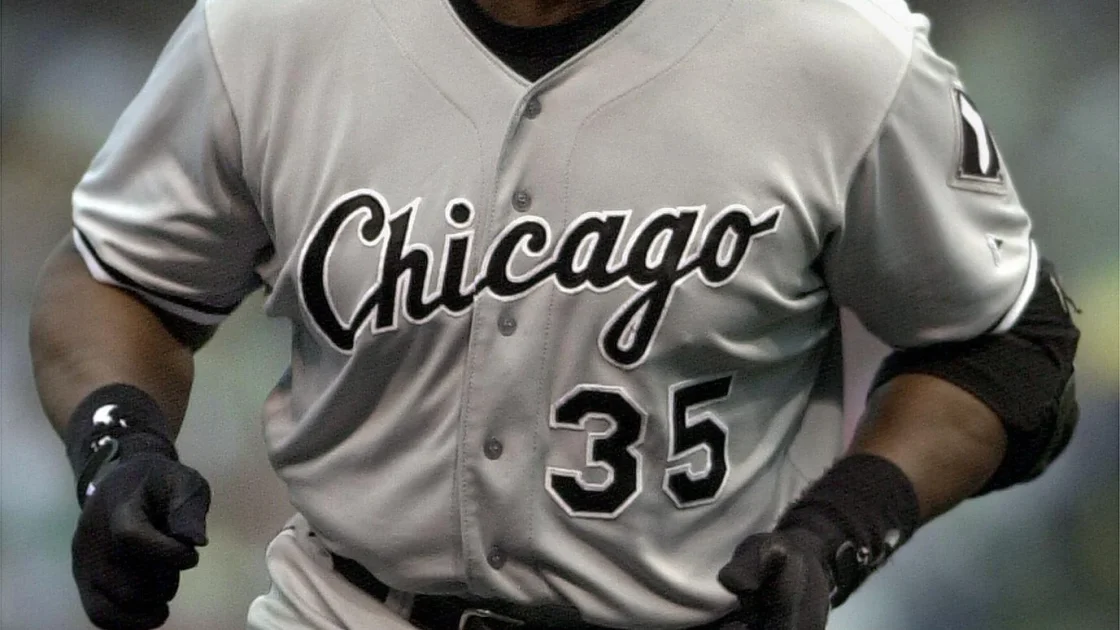
In 2000, Frank Thomas finished second in AL MVP voting to Jason Giambi, who won 371 votes to 285. Giambi hit .333 with 43 home runs, 137 RBIs, and a 7.8 WAR, while Thomas recorded a .328 batting average, 43 home runs, 112 RBIs, and a 6.0 WAR. While Giambi’s later admission of steroid use during the 2000 season sparked enduring debates, metrics showed that other players, including Pedro Martínez with an 11.7 WAR and Alex Rodriguez with a 10.4 WAR, had stronger overall cases for the award.