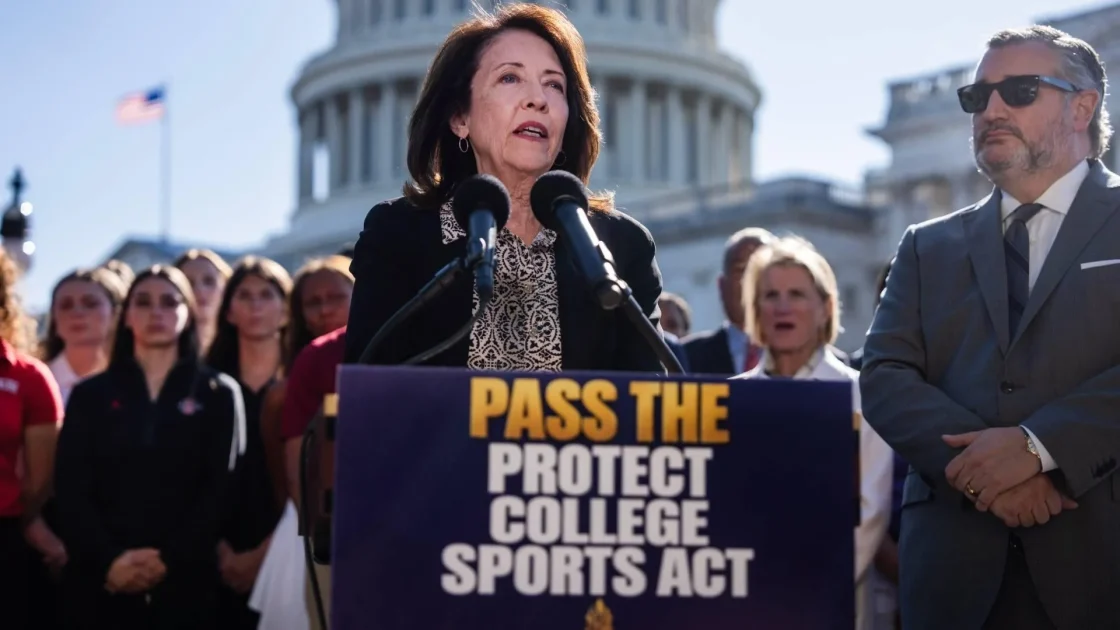
College sports legislation that many in Washington had previously counted out has received a renewed push as lobbying efforts and negotiations accelerate. House Republican leaders announced a target date on Thursday to bring the Protect College Sports Act to the House floor during the first week of December.
House Leadership Plans December Vote
House Majority Leader Steve Scalise, Education and Workforce Committee chairman Tim Walberg, and Energy and Commerce Committee chairman Brett Guthrie stated their intention in a joint announcement to bring the landmark bill to the floor just in time for conference championship weekend.
“College sports are at a crossroad and Congress needs to pass strong antitrust protections to end the Wild West atmosphere that exists today,” the three Republicans said, adding that they are committed to delivering a bill to President Trump’s desk that saves college sports.
At the same time, leadership acknowledged that the legislation in its current form faces genuine hurdles in the House from various factions taking issue with specific measures, alongside outright opposition from Democrats. Leaders noted they are working with members to resolve concerns while keeping changes narrow to preserve fragile coalitions in both chambers.
Any alterations to the bill would send it back to the Senate, which previously passed it by a 77-22 vote on Sept. 28, requiring the upper chamber to vote on the measure once more. Lawmakers face a shrinking timeline to finish business before the new Congress is sworn in on Jan. 3, with government funding expiring Dec. 11 and the House’s final scheduled workday set for Dec. 17.
Outside Lobbying and Key Opposition
Outside advocates, including Texas Tech booster Cody Campbell and New York Yankees president Randy Levine, spent Thursday lobbying on Capitol Hill alongside Big Ten commissioner Tony Pettiti, according to CBS Sports sources. Campbell, whose Saving College Sports group is funding an ad campaign during football broadcasts, and Levine have spearheaded the external push for the measure. A source close to Campbell indicated backers remain confident in the bill’s broad support, while Levine urged lawmakers in a letter last week to pass the legislation.
The 171-page bill aims to grant schools, conferences, and the NCAA targeted antitrust protection to enforce rules concerning athlete pay, eligibility, and transfers, while preempting patchwork state NIL laws and raising the revenue-sharing cap to $48.8 million per school. However, obstacles extend beyond a single provision.
A provision capping power conferences at 20 members and restricting mid-season coaching hires drew objections from 21 House Republicans in an Oct. 2 letter. Other lawmakers advocate for an outright ban on classifying athletes as employees or a limit on international players, aligning with Walberg’s TEAM USA Act, which proposes capping international athletes at 20 percent of varsity rosters.
Democrats present a major obstacle, with the Congressional Black Caucus having condemned the bill following the Senate vote over concerns regarding HBCU funding, athlete employment rights, and limits on legal recourse. Meanwhile, Senator Ted Cruz has engaged in negotiations with House Democrats regarding potential additions such as student loan forgiveness for HBCU attendees, as reported by Front Office Sports.
As conferences prepare for a future with or without federal legislation, the Knight Commission on Intercollegiate Athletics urged conferences on Wednesday to adopt self-governance models to cap spending on coaching pay, buyouts, and facilities, regardless of whether the PCSA passes.