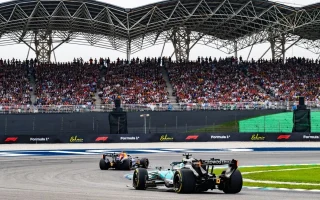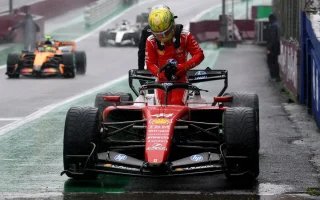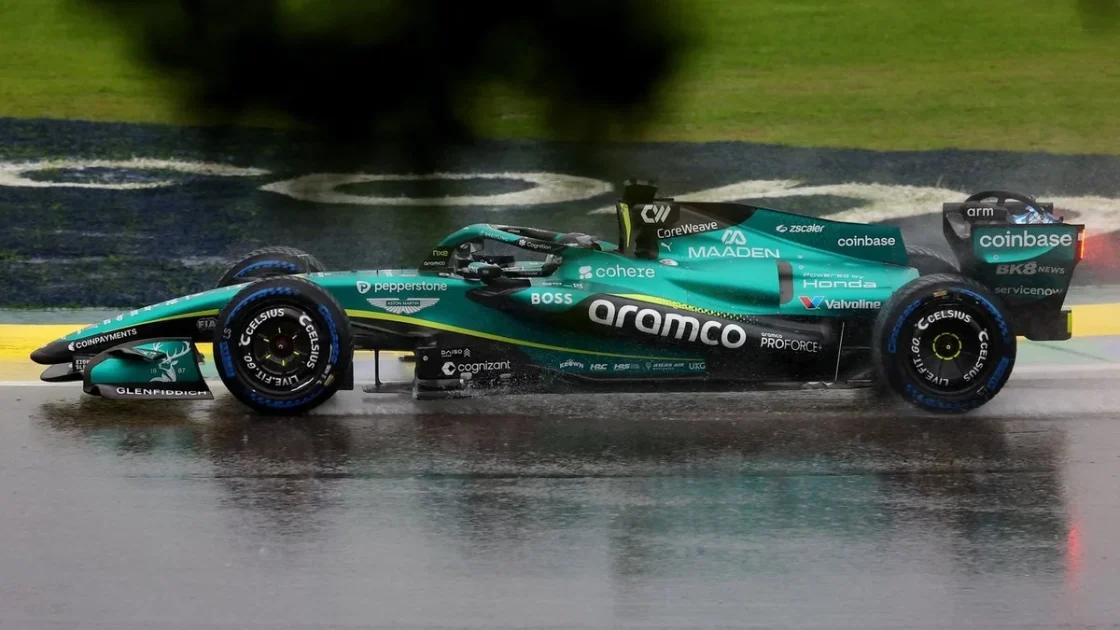
Honda is preparing a significant redesign of its Formula 1 battery structure for 2027 to address persistent reliability concerns. The manufacturer confirmed the move following a recent battery failure that forced Lance Stroll to retire during the Brazilian Grand Prix.
Addressing Battery Reliability
The retirement in Brazil marked Stroll’s 14th of the season, tying the all-time record for the most DNFs in a single year. Speaking to Autosport ahead of the Las Vegas Grand Prix, Honda chief engineer Shintaro Orihara confirmed that inspections identified the cause of the failure. While the team implemented a countermeasure for the Brazilian race, it proved insufficient to prevent the issue.
Honda has introduced a new, secondary countermeasure for the Las Vegas event to improve reliability, though Orihara noted that it may not fully resolve the problem. “The countermeasure we brought to this event will probably, how to say, not fully prevent it. We still need to get a complete picture and understanding,” he told Autosport.
To move beyond temporary fixes, Honda is now working at its Sakura facility to overhaul the internal structure of the energy store. The manufacturer stated that this change is intended to increase the robustness and overall reliability of the system. While the decision to update the design predates the Brazil incident, Orihara explained that data gathered from this year’s failures is being used to refine the 2027 power unit.
Combustion Development Challenges
Beyond battery reliability, Honda remains focused on maximizing performance from the internal combustion engine (ICE). Orihara emphasized that energy management improvements are ineffective if the ICE lacks sufficient power. However, the manufacturer has faced hurdles adapting to current regulations, which differ significantly from previous cycles.
Under former rules, Honda achieved strong performance through “rapid combustion.” The team initially attempted to apply similar methods to the current regulations, but soon realized that a different approach was required. A major technical constraint is the absence of cylinder pressure sensors under the current rules, which has forced Honda to seek alternative combustion styles.
Orihara noted that while the engine can reach the required peak power, maintaining that output consistently across a wider range remains a challenge. “If we have good control, we can keep that peak power in a wider range,” Orihara explained. “But if we don’t have good control, we just get peak power, but without that wider range, there’s less torque delivery or torque accuracy.”
Honda continues to work on improving combustion control and performance to ensure the power unit can deliver its potential more effectively in future races.