
Table of Content
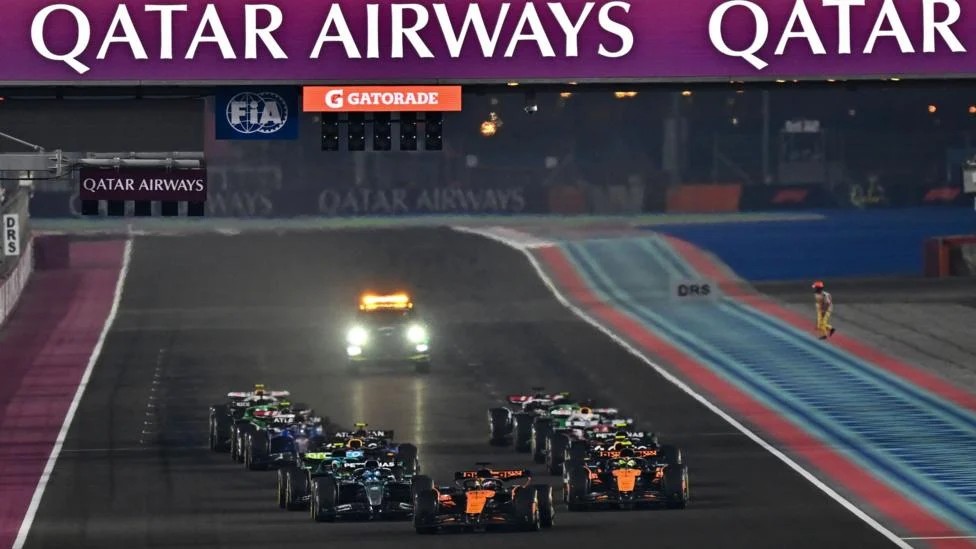
Max Verstappen secured victory at the Las Vegas Grand Prix, navigating a chaotic race featuring 34 lead changes across 50 laps. As the Red Bull driver held off challenges from Mercedes and his own teammate, Ferrari faced further internal friction between Lewis Hamilton and Charles Leclerc, prompting questions about the sustainability of their partnership.
Ferrari’s Internal Struggles
The relationship between Lewis Hamilton and Charles Leclerc has become a recurring source of tension for Ferrari. In Las Vegas, both drivers were issued 10-second penalties following separate incidents, including a collision between the two. Team principal Frederic Vasseur described the situation as “unacceptable,” marking the latest in a series of on-track flashpoints this season.
Previous conflicts include disputes over race strategy in Zandvoort and Singapore, an aggressive maneuver at Monza, and a first-lap incident in Mexico that cost the team a potential one-two finish. Hamilton has also publicly disregarded team instructions to pit on multiple occasions.
According to BBC F1 correspondent Andrew Benson, the core issue is that both drivers are competing for supremacy within the team. While Ferrari aims to allow them to race, this approach is currently impacting the team’s results. The situation could become significantly more volatile if Ferrari develops a car capable of challenging for the world championship next season, as both drivers are driven by distinct motivations: Hamilton seeking a record-breaking eighth title and Leclerc aiming for his first championship with the team.
Benson notes that for the partnership to succeed, both drivers must adopt the approach seen at McLaren with Lando Norris and Oscar Piastri, where drivers accept the need for occasional sacrifices for the team’s benefit. Ultimately, it will be up to Vasseur to determine when team orders are necessary to protect the team’s interests.
The Dynamics of the Las Vegas Grand Prix
The intense, close-quarters racing in Las Vegas was driven by specific technical factors rather than driver behavior. The track layout, characterized by long straights, combined with energy-starved engines and cold temperatures, prevented leaders from pulling away from the pack.
Max Verstappen explained that the “tow” provided a significant lap-time advantage of over 0.5 seconds, while the “overtake mode”—which grants extra electrical energy to cars within a second of a rival—further neutralized the advantage of the lead car. Additionally, the smooth track surface resulted in minimal tire degradation, allowing drivers to push continuously without the usual thermal management constraints that typically limit close racing.
F1’s Future and Road Relevance
Regarding concerns that future F1 engines with reduced electrical components might become less relevant to road cars, Benson explains that the current 50-50 hybrid split was designed years ago when the automotive market outlook differed. The upcoming 2030 regulations, which emphasize sustainable fuels, were developed in collaboration with manufacturers who rejected a move toward non-hybrid engines.
The focus on sustainable fuel is viewed as a potential “game-changer” for reducing emissions from the existing global fleet of internal combustion vehicles. By simplifying the requirements for these fuels, F1 aims to make them more cost-effective, potentially reducing the carbon impact of legacy vehicles by approximately 80%.
Meanwhile, the rivalry between George Russell and Max Verstappen continues to draw attention. Mercedes team principal Toto Wolff characterized their ongoing friction as a long-standing “cat and mouse” dynamic dating back to their karting days. While Russell has publicly criticized Verstappen’s driving, Benson suggests these comments have little impact on the Dutchman, who remains focused on his competitive objectives regardless of external provocation.