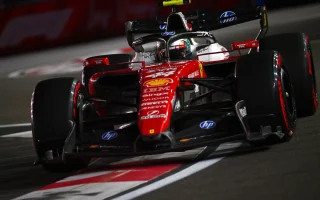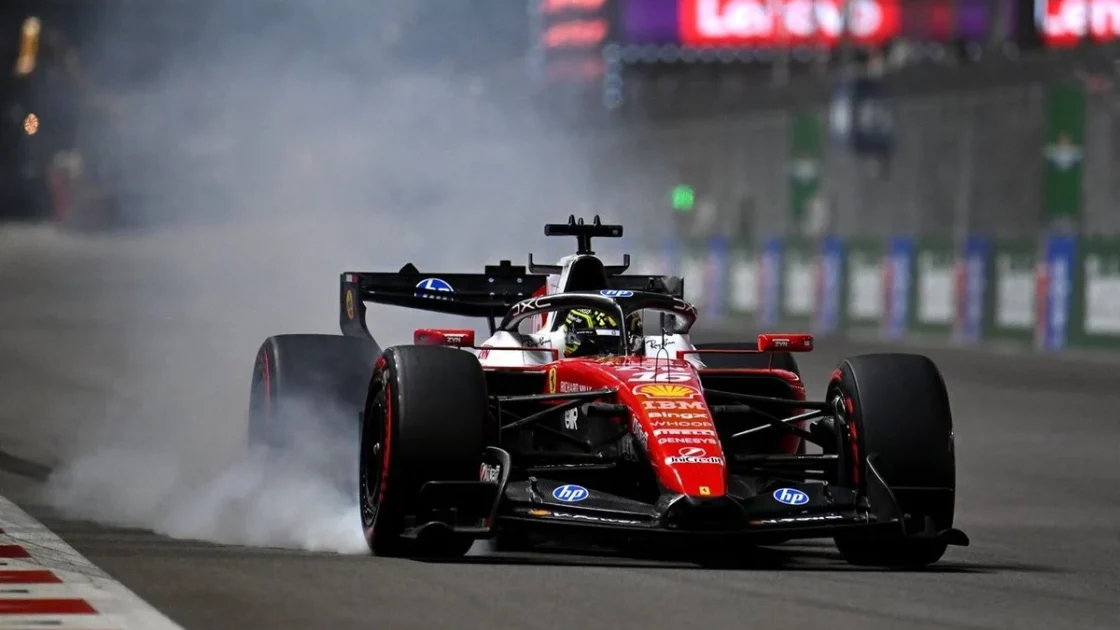
Although Max Verstappen secured the second-fastest time in qualifying for the Formula 1 Las Vegas Grand Prix, a glance at Ferrari highlighted a much more difficult session for the Scuderia. Both Ferrari cars were eliminated in Q2 for the first time since Imola 2025, leaving drivers Lewis Hamilton and Charles Leclerc grappling with severe deficits on the track’s long straights.
Ferrari’s Design Choices and Power Deficit
Ferrari anticipated that the Las Vegas circuit would present a major challenge due to deliberate design choices. The team utilizes a smaller turbo than other power unit manufacturers, which provided an advantage off the line early in the year but impacts outright power. FIA measurements placed the Italian manufacturer between 2 percent and 4 percent down on the top internal combustion engine on the grid, which belongs to Red Bull.
This deficit becomes pronounced in Las Vegas because energy clipping on the long straight forces drivers to rely entirely on internal combustion power for extended periods. Beyond engine power, Verstappen told Motorsport.com that Ferrari’s aerodynamic approach also plays a role in their top speed struggles.
“They are obviously lacking top speed, but that has to do with the way they have designed their exhaust blowing as well. Because if you look at Haas, it’s much less of an issue on the straight,” Verstappen stated, adding that power sacrifices are tied to downforce choices. “The bigger you make that thing in front of the exhaust, the more power you lose. So to some extent, it’s obviously in their own hands as well.”
Exhaust Wing Handicap and Red Bull’s Progress
Verstappen referred to Ferrari’s pioneering exhaust wing concept, which generates extra downforce but creates a disadvantage on tracks with long straights like Las Vegas. While acknowledging that Ferrari may need to adapt their approach, Verstappen noted that execution was also a factor, particularly as the Ferrari drivers ran mostly without a slipstream despite lacking top speed.
Meanwhile, Red Bull has improved significantly on energy-poor circuits. Earlier in the season, efficiency at such venues was a weakness compared to Mercedes, but Red Bull Ford Powertrains gained substantial knowledge throughout the year.
“At the beginning, we obviously had a lot of problems with our car and we weren’t quite on top of things with the power unit either. I think that automatically meant we had some easier steps to make, but we still made those steps. And that’s something we should be proud of,” Verstappen explained.
Verstappen emphasized that his primary focus remains on his own team’s execution and minimizing mistakes rather than analyzing competitor strategies.