Table of Content
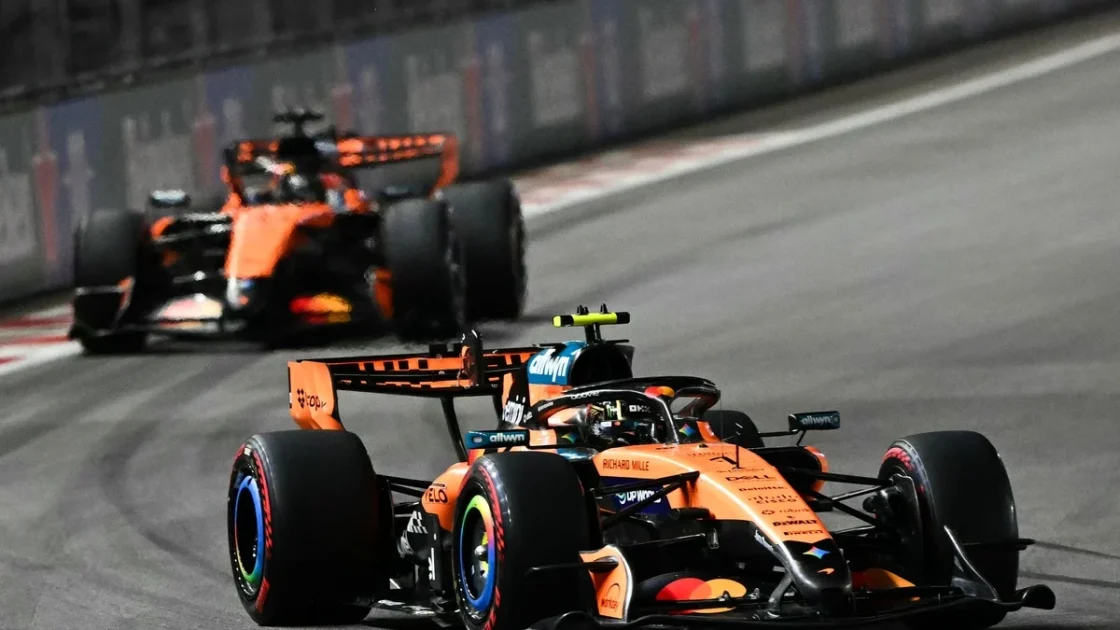
Lando Norris voiced strong frustration following qualifying at the Las Vegas Grand Prix, where he secured fifth place before penalties. The British driver slammed his car’s straight-line performance on a circuit that heavily exposed the weaknesses of the MCL40.
McLaren Struggles With Top Speed
Norris stated after qualifying that the car was shocking on the straights, finishing just under eight tenths behind polesitter Kimi Antonelli, who held a five-place grid penalty. The long straights and low downforce demands of the Las Vegas Strip circuit made it a difficult track for McLaren, mirroring their challenging outings at similar venues like Monza and Baku. However, both Norris and team-mate Oscar Piastri found themselves roughly 20km/h slower on the long Las Vegas Boulevard and the final straight compared to their rivals.
As Motorsport.com reported, the massive deficit stemmed from multiple factors. The MCL40 remains relatively draggy and aerodynamically inefficient despite ongoing upgrades. This issue was compounded by the team’s pre-season decision to use shorter gearing, which sacrifices top-end speed on tracks with extremely long straights. Teams were permitted one mid-season gear ratio change, but McLaren opted against it because the shorter gearing suited other tracks better.
Team principal Andrea Stella explained that the circuit demands created challenging operating regimes for the engine combined with the towing effects other cars used. Stella noted that the aerodynamic drag is not a strong point for their car, leading to uncompetitive conditions similar to what they experienced in Monza and Baku.
Mitigating Deficits Through Track Position
With slipstreaming playing a major role in qualifying, McLaren attempted to compensate for its straight-line speed disadvantage by aggressively chasing the tow. Stella told Motorsport.com that the team managed this better by securing good positioning, placing the car where they wanted it in qualifying. He added that the drag reduction when following multiple cars is greater under current regulations, creating a higher incentive for precise positioning.
Norris elaborated on the compromises required, stating he had to start his lap 1.5 seconds behind the leading car, which cost him half a tenth to a tenth of a second in every corner due to lost downforce. He explained that while the slipstream provided a net gain at the end of the lap, the team had to sacrifice cornering speed to make up for the severe straight-line deficit.
External factors also played a role, as Antonelli benefited from an extreme tow behind a group of Racing Bulls and Alpine cars, which likely exaggerated McLaren’s true deficit. Piastri, who qualified seventh after a messy lap, admitted that the scale of the top speed disadvantage caught the team by surprise, particularly because the deficit was prominent against other Mercedes-powered cars.
Upgrades and Race Outlook
Stella remained optimistic about a revised floor trialled by Norris in Las Vegas that improved low-speed performance. However, that upgrade’s benefits were partially negated by an unusual incident during the session.
Stella revealed that a plastic bag became stuck in the floor on Norris’s side of the garage, causing a significant loss of downforce that cost the driver valuable time. Looking ahead to the race, Stella expressed encouragement regarding their competitive qualifying pace and pointed out that the towing effect allows cars to stay closely linked during the grand prix.