Table of Content
Manchester United face striking historical parallels to their infamous relegation in 1974, finding themselves struggling in the relegation zone at this stage of the season for the first time in 40 years. Following the departure of a legendary manager, the club has experienced ongoing boardroom uncertainty and a rapid turnover of successors as performance slides over several years.
Parallels Across the Decades
Sir Matt Busby stepped aside after leading the 1968 European Cup-winning side, yet he remained on the board of directors and watched from the Old Trafford directors’ box as managers tried and failed. A similar shadow remained after Sir Alex Ferguson’s departure. In the six years following their European triumph, United turned through Wilf McGuinness, a temporary return by Busby, and Frank O’Farrell before appointing Tommy Docherty, who ultimately suffered relegation. In contrast, the past eight years have seen the dismissals of José Mourinho, Ole Gunnar Solskjær, Erik ten Hag, Ruben Amorim, and Michael Carrick.
When United struggled near the bottom in December 1972 after a heavy defeat at Crystal Palace, Busby offered Docherty the job in the Selhurst Park boardroom. Busby warned Docherty that the club had significant internal trouble and that fixing it would be like turning an oil tanker around, adding that he might need to take a step back to take a leap forward. Docherty was given free rein to rebuild the squad, immediately signing George Graham from Arsenal, Alex Forsyth from Partick, and persuading Lou Macari to choose United over Liverpool.
A Radical Overhaul and Relegation
Docherty moved on the giants of the previous era, noting that while the 1968 European Cup winners were a great team, many members had been allowed to grow old together. Bobby Charlton announced it would be his final season, while Docherty ended the United careers of Denis Law, Tony Dunne, Pat Crerand, and David Sadler. George Best played his final match on New Year’s Day 1974 after repeatedly arriving late, and Law was allowed to join Manchester City.
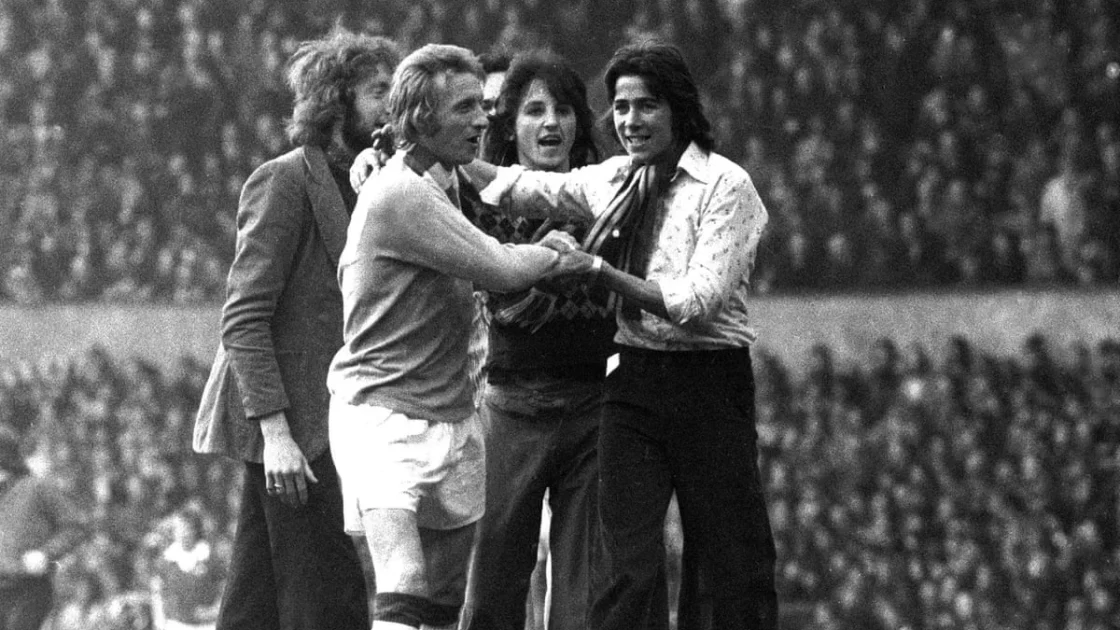
After keeping United up in his first season, Docherty released 13 players that summer. However, halfway through the following campaign, a lack of goals plagued the team, with goalkeeper Alex Stepney serving as joint-top scorer at one point with two penalties. Relegation was confirmed on the penultimate matchday following a defeat to Manchester City, sealed by a late back-heeled winner from former player Denis Law. Despite the disappointment, Docherty expressed confidence in the club’s massive drawing power, and Busby subsequently handed him a case of champagne to prepare for a immediate return.
The Road Back and Modern Challenges
True to Docherty’s predictions, the club’s brand remained massive. In the Second Division, Old Trafford averaged crowds exceeding 47,000—the largest in the country—while away support routinely outnumbered home contingents. Docherty recruited young, hungry talent seeking to prove themselves, bringing in Steve Coppell from Tranmere, Stuart Pearson from Hull, and Jim Holton from Shrewsbury, while establishing a fearless 4-2-4 formation that revived United’s direct, attacking football. They bounced straight back up, finishing third in the top flight the following season and reaching the FA Cup final.
Nevertheless, stark differences exist between the football landscape of the 1970s and today. The competitive gap between the first and second tiers was much narrower, clubs did not lose colossal broadcast deals upon relegation, owners had not saddled teams with debt, and wage bills were not tied to Champions League qualification. Furthermore, players were not tied to long contracts, squad turnover was simpler, disruptive agents were absent, and supporters exhibited greater patience.
If the hard lessons of the 1970s are ignored, the eventual fallout for the club could prove infinitely more painful.