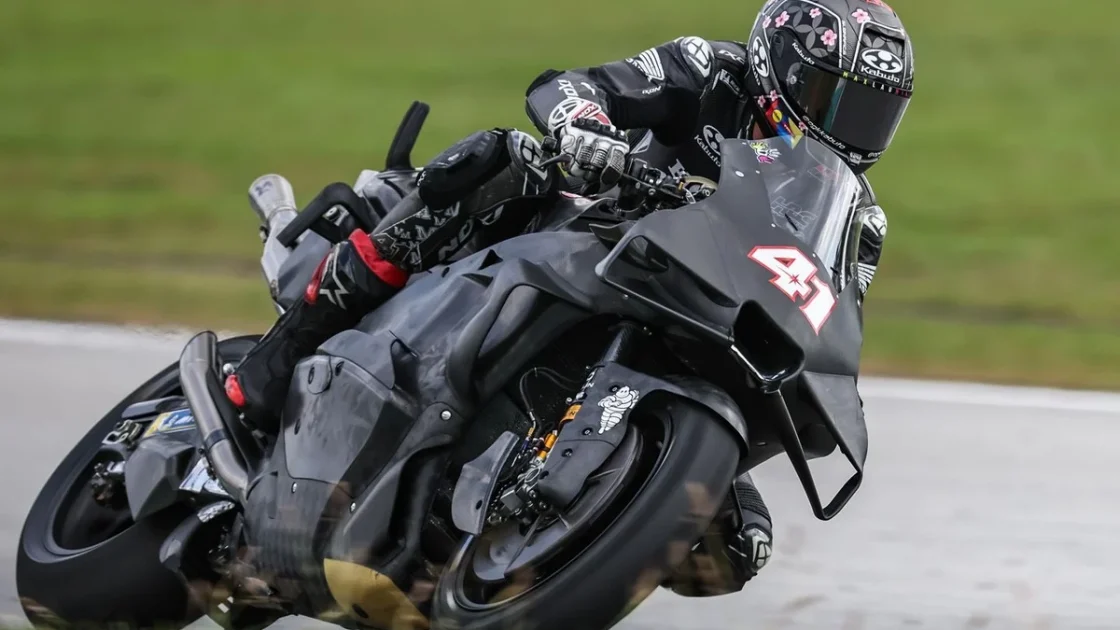
Honda states that MotoGP’s upcoming 850cc motorcycles will stay relatively close to current 1000cc machines because reductions in engine power are largely offset by improvements in other areas. Although factories are developing the new generation behind closed doors, data from a test in Austria indicates performance will not drop dramatically when new rules arrive.
Initial Testing and Performance Expectations
According to reports from Motorsport.com, Honda rider Diogo Moreira recorded a lap time of 1m28.4s at the Red Bull Ring during a September test, finishing only half a second slower than Jorge Martin’s pole position lap on a factory Aprilia during the Austrian Grand Prix. These findings challenge initial expectations that smaller engines, prohibitions on ride-height devices, and stricter aerodynamic limits would cause massive performance drops.
Honda technical director Romano Albesiano told Motorsport.com that the swift early pace has not surprised him, noting that engine power is the primary area where the 850cc prototypes lag behind current bikes. Simulations already demonstrated that lap time differences would not be massive, though top speed differences would be substantial, particularly on power-heavy circuits.
Aerodynamics and Cornering Performance
Albesiano confirmed that lower engine capacities will reduce straightline performance as rulemakers intended, but he believes engineers will recover lost time through better aerodynamics and airflow management. He pointed out that engine power limits only affect a brief portion of a circuit, while braking, turning, and acceleration rely on other vehicle dynamics.
He noted that cornering speeds between the two generations of motorcycles are currently very close. While straightline deficits will persist early in the new rule cycle, Albesiano expects continuous development in cornering speed, braking, and engine power to eventually match the performance levels of the current 1000cc prototypes.