Table of Content
McLaren driver Lando Norris has expressed concerns regarding the performance of Pirelli’s current rain tyres, warning that they could prove dangerous at the upcoming Las Vegas Grand Prix. Norris suggested that the tyres struggle significantly in cold conditions, a factor that could pose serious challenges on the low-downforce street circuit.
Driver Concerns Over Tyre Operating Windows
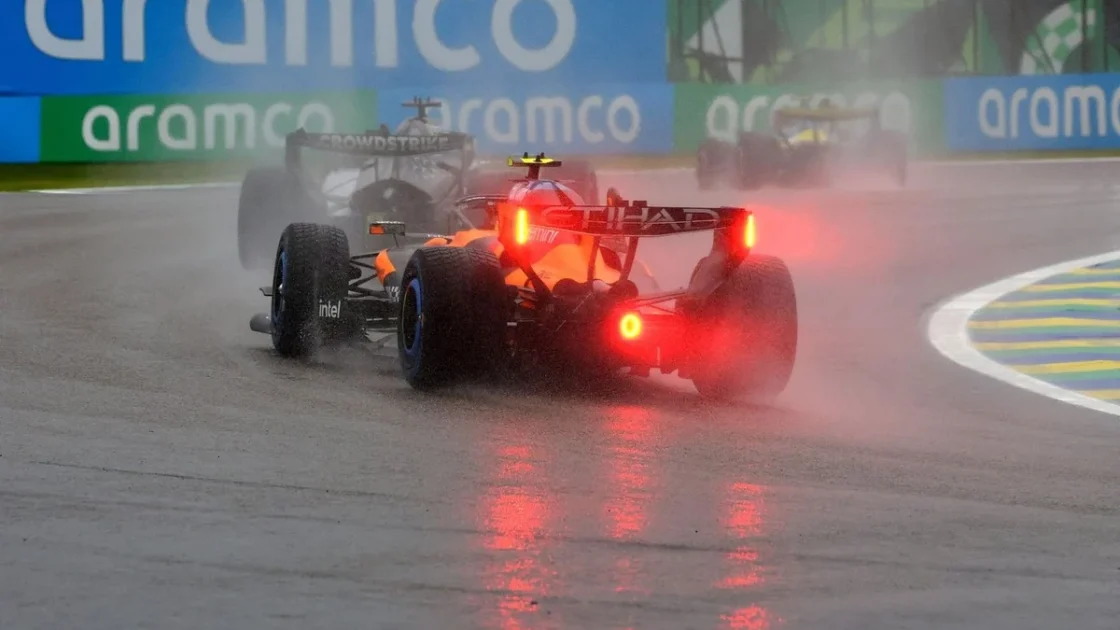
Following the Brazilian Grand Prix, which served as the first true test for the 2026 generation of cars in wet conditions, several drivers highlighted issues with the current intermediate and full-wet compounds. While the tyres performed adequately at Interlagos, drivers noted that the intermediate compound is particularly difficult to manage when temperatures are low.
Norris told Autosport that the tyres feel “horrible” when they lose heat, such as during laps to the grid. “If they get into a good window, they’re good. So, I think the scary times are if you go to Vegas and you can’t get any tyre temperature. You need a much better tyre than what we have here because that’s going to be horrible,” Norris explained.
Max Verstappen echoed these sentiments, noting that the working range of the tyres is too narrow. The Red Bull driver described the tyres as feeling “like a rock” when cold, adding that expanding this operating range is essential for better performance in heavy rain. Williams driver Carlos Sainz also criticized the current range, stating that the intermediate tyre is weak at the rear and that the extreme wet tyre suffers from significant aquaplaning and a lack of rear grip.
Pirelli’s Development Challenges
Pirelli faced a complex development cycle for the 2026 regulations, which introduced high-torque power units and active aerodynamics. The supplier had to estimate the downforce levels teams would achieve, a target that shifted as teams accelerated their in-season development. While the FIA introduced measures to improve safety in the wet—such as limiting front wing activation and reducing electric output—these changes occurred after the tyre specifications were already set.
Because the running in Brazil occurred late in the season, Pirelli cannot incorporate data from that weekend into its 2027 product, as the homologations for next year are already finalized. However, the manufacturer has been working on improvements throughout the year based on earlier testing.
Future Improvements for 2027
Pirelli’s trackside engineering chief, Simone Berra, confirmed that the company tested new solutions for the intermediate tyres during a session at Magny-Cours last month. These tests involved adjustments to compounds, tread thickness, and tyre structures. “For sure the idea is to improve the wet-weather product for next year,” Berra stated.
Dario Marrafuschi, Pirelli’s head of motorsport, emphasized that the company has taken driver feedback seriously. He noted that while the development for 2027 is closed, the company believes it has made progress based on data gathered earlier in the year and testing sessions in Suzuka and France. Pirelli plans to disclose the specific outcomes of the Magny-Cours test in the near future.