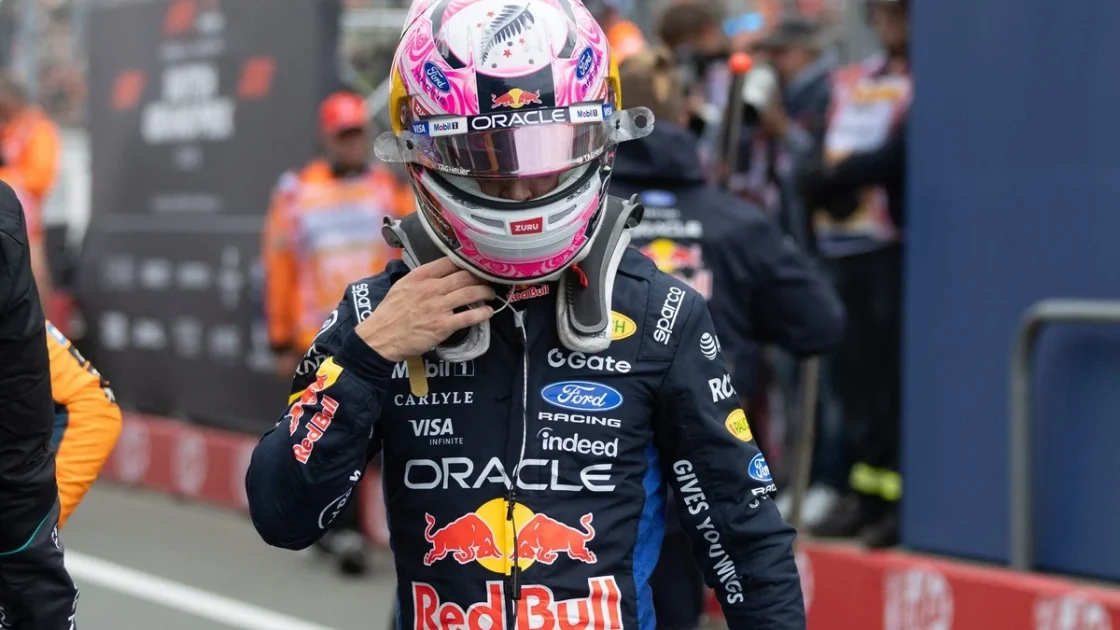
Liam Lawson never failed at Red Bull Racing in 2025, but rather the organization failed him. Keeping him for another year is a logical move and a potential sign that the team is shifting away from the habits developed under Helmut Marko.
A Standout Season in the Midfield
Almost everyone agrees that the New Zealander deserved to stay in Formula 1 after his strong performances this year, especially having endured prolonged uncertainty about his future. His strongest period coincided with mounting questions in the paddock regarding what more he needed to do to secure a seat. His confirmation arrived following a streak of five points finishes—including four seventh-place results—which placed him firmly at the head of the midfield. He holds ninth in the standings with more than double the points of Pierre Gasly directly behind him, driving Racing Bulls toward what looks to be its best team result in history.
This season marks Lawson’s strongest in Formula 1, largely because it is his first proper campaign without being deployed as a substitute or rushed into an impossible role, as occurred in early 2025. His difficult initial outings for Red Bull came as little surprise to anyone outside the organization. Placing him in the same garage as Max Verstappen after just 11 career starts was unreasonable. Yet those two races still influence how he is perceived by some inside and outside Red Bull, casting him as someone who squandered his opportunity.
Breaking From Past Management Habits
Disregarding those few early months reveals a completely different picture. Lawson performed well standing in for Daniel Ricciardo in 2023 and delivered a strong finish to the following season. His career has remained heavily fragmented across stints with the Faenza squad, a sudden promotion and demotion at Red Bull, and even stepping in for three races to replace Isack Hadjar earlier this year. The 2026 campaign finally gave him a car he could truly call his own after participating in its development.
Denying Nikola Tsolov a seat in order to keep Lawson indicates that Red Bull values the New Zealander’s season and is beginning to step away from Marko’s uncompromising and sudden decisions. While Marko’s junior program achieved massive success and produced four-time world champions, it also caused drivers like Jean-Eric Vergne, Sebastien Buemi, and Daniil Kvyat to be overlooked, dropped, or promoted prematurely. Lawson could easily have shared Vergne’s fate at the end of 2014 when he was dropped by Toro Rosso without a senior team promotion.
If Red Bull is truly changing its approach, it must stop viewing Lawson as a failure. The fault a year and a half ago lay with a system that judged every driver against Max Verstappen, ignoring the reality that generational talents are exceptionally rare. Speculation already surrounds Lawson’s potential and whether 2027 will bring pressure about his future. Red Bull has conditioned observers to believe its young drivers carry an expiry date, but Lawson has proven he belongs in Formula 1 and delivers strong results for his team.