Table of Content
Real Madrid forward Kylian Mbappé missed out on the Ballon d’Or and instead joined the list of foreign figures charged with hurting the feelings of the Chinese people. The controversy began when a video spread online showing the French player making light of a meme involving himself and China’s former leader Mao Zedong.
The Backlash and Apologies
Within hours, Mbappé faced online condemnation, lost brand endorsements, and was blamed for state television suspending La Liga matches from its schedule. Mbappé issued an apology on Tuesday, stating his comment was ill-judged and that he now understands it hurt many people in China. La Liga also apologized, releasing a statement expressing deep regret over the offence caused by the player’s remarks.
Foreign brands and celebrities, including Mercedes, Versace, John Cena, and Katy Perry, have previously faced similar backlashes for crossing China’s political lines regarding Tibet, Hong Kong, and Taiwan. Mbappé’s situation demonstrates the enduring sensitivity surrounding Mao Zedong’s legacy 50 years after his death, to the point where most domestic media coverage omitted what the footballer actually said.
In the video, Mbappé references a meme of himself and a Chinese dictator before a composite image of his face on Mao’s body appears. Mbappé has held the nickname “the dictator” since his time at Paris Saint-Germain due to his perceived influence at the club.
Media Silence and Public Sentiment
The football app Dongqiudi condemned the inappropriate remarks but noted it could not translate them because they were offensive to China and the Chinese people. Chinese media reported on brand desertions and the China Football Association lodging a stern protest with Real Madrid, which apologized on Wednesday for any offence caused. However, outlets generally steered clear of detailing Mbappé’s precise offence.
The topic trended heavily on Chinese social media, with a hashtag for the superstar’s apology generating over 600 million views. Manya Koetse, editor of the Eye on Digital China newsletter, noted on X that many netizens without a VPN remained unaware of why boycotting Mbappé was happening.
Mobo Gao, a professor of Chinese studies at Adelaide University, stated that for the majority of Chinese people, Mao is not viewed as negatively as he often is in the West. Mao founded modern China, though his rule included policies like the Great Leap Forward, an industrialisation initiative blamed for a famine that caused up to 30 million deaths by some estimates. The ruling Communist Party maintains Mao was a revolutionary hero while acknowledging that the subsequent Cultural Revolution was a grave mistake.
Financial Impacts and Diplomatic Reactions
Stanford University communication professor Jennifer Pan noted that the lack of independent social science surveys makes it difficult to gauge actual public opinion in China. Pan stated that companies, platforms, broadcasters, and the foreign ministry moved quickly together, making it unclear whether public anger preceded or resulted from their actions.
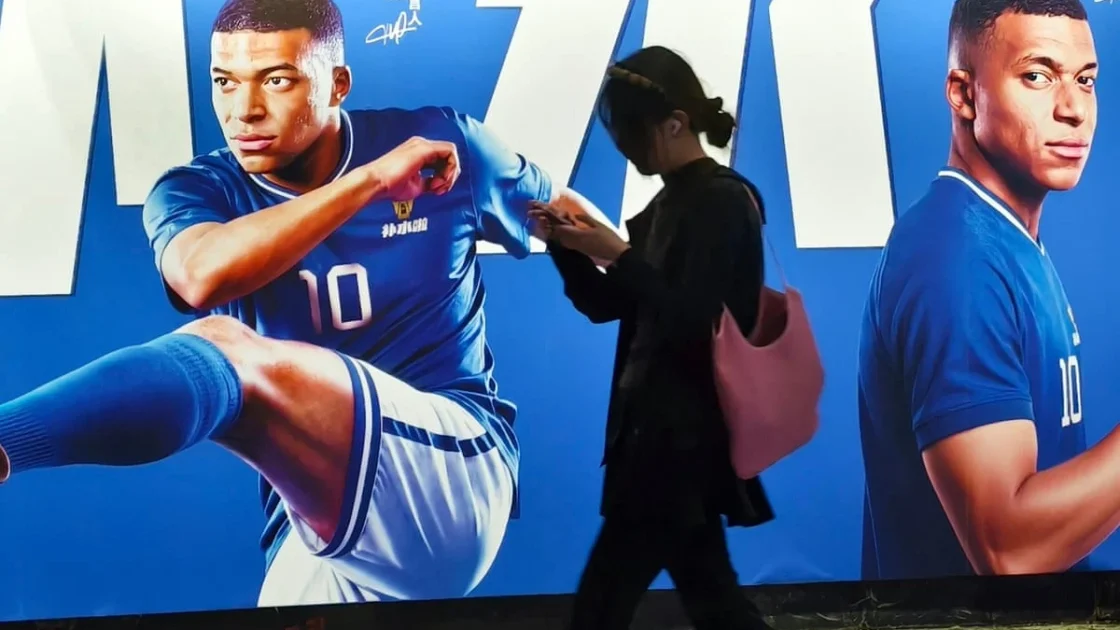
Mark Dreyer, author of Sporting Superpower, estimated Mbappé’s commercial deals in China could be worth up to $30m per year, with his face commonly featured on buses, subways, and online ads. Dreyer explained that once someone is deemed to have crossed the line, brands rush to cut ties and demonstrate patriotism, leaving individuals needing to apologize to stay in the market.
The swift apologies from Mbappé and La Liga aim to avoid the fate of the NBA, whose pre-season matches were shut out of China for six years after a 2019 Hong Kong-related post by then-Houston Rockets general manager Daryl Morey. State broadcaster CCTV indicated it would monitor Mbappé’s future words and actions, while foreign ministry spokesperson Guo Jiakun stated that China takes the individual’s apology seriously. Dreyer noted that while forgiveness is not immediate, the response suggests a measured approach going forward.