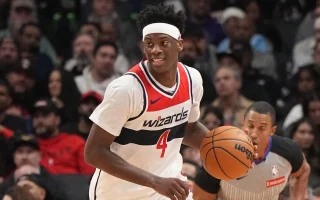

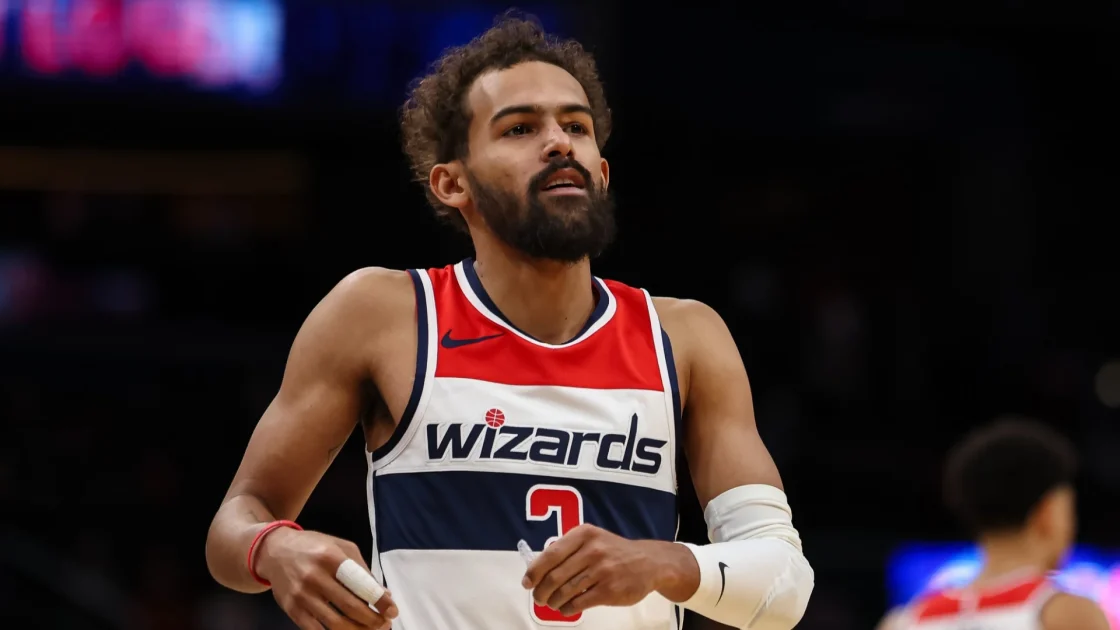
The Washington Wizards have found recent success by limiting Trae Young’s ball-handling responsibilities, sparking a winning streak. However, paying a declining star a max salary creates a major roster dilemma.
A Shift in the Wizards’ Offense
The Washington Wizards entered Tuesday with a 7-11 record. In their seven wins, Trae Young is averaging just under 11.3 shot attempts per game, compared to 13.3 shots in their 11 losses. During a recent three-game winning streak, a meaningful part of the success has come from Young spending less time on the ball.
In Washington’s first 15 games, Young averaged roughly 6.6 minutes of possession per contest, tying him for the third-most in the league. That number dropped to 4.5 minutes over his last three games. He is also dribbling about once fewer per touch, and his average possession time per touch has decreased by about a second. These adjustments have coincided with the two best offensive performances of the season for No. 1 pick AJ Dybantsa.
Young, 28, has struggled significantly as a scorer this season, shooting just 36.4% from the floor and 32.5% from beyond the arc. He is struggling in the paint and failing to beat defenders off the dribble as easily as before. As reported by The Athletic, Wizards officials intentionally asked Young to focus less on scoring and emphasize playmaking instead. During this stretch, Young posted a 24-to-7 assist-to-turnover ratio, utilizing his high basketball IQ to organize the offense for younger players.
The Financial Dilemma and a Daunting Role Change
The core issue for the Wizards is financial. They signed Young to a four-year, $212 million max contract after just five games with him last season. Combined with Anthony Davis’s contract, the team traded roster-building flexibility for two declining stars. While Davis has justified the investment as an asset, Young has not.
Wizards coach Brian Keefe told The Athletic that Young still holds gravity when playing off the ball, drawing defenders and creating secondary actions. However, Young has never been a reliable catch-and-shoot player, averaging less than two catch-and-shoot three-point attempts per game this season while converting about 28% of them. Entering his ninth NBA season, making such a dramatic transition from a heliocentric on-ball player to an off-ball contributor is extremely difficult.
Stephen Noh’s salary model estimates that Young is worth $26.3 million this season, roughly half of his actual salary, making his deal one of the worst in the NBA if the trend continues. Furthermore, passing value depends heavily on a player’s scoring threat; if Young no longer draws defensive help, his passing lanes become narrower.
Ultimately, taking the ball out of Young’s hands helps the Wizards win games in the present by distributing usage to foundational players like Dybantsa. Yet, reducing his role leaves the franchise paying max money to a player who no longer provides max-level production. The team is left choosing between maximizing Young’s individual skill set or maximizing the overall team.