Table of Content
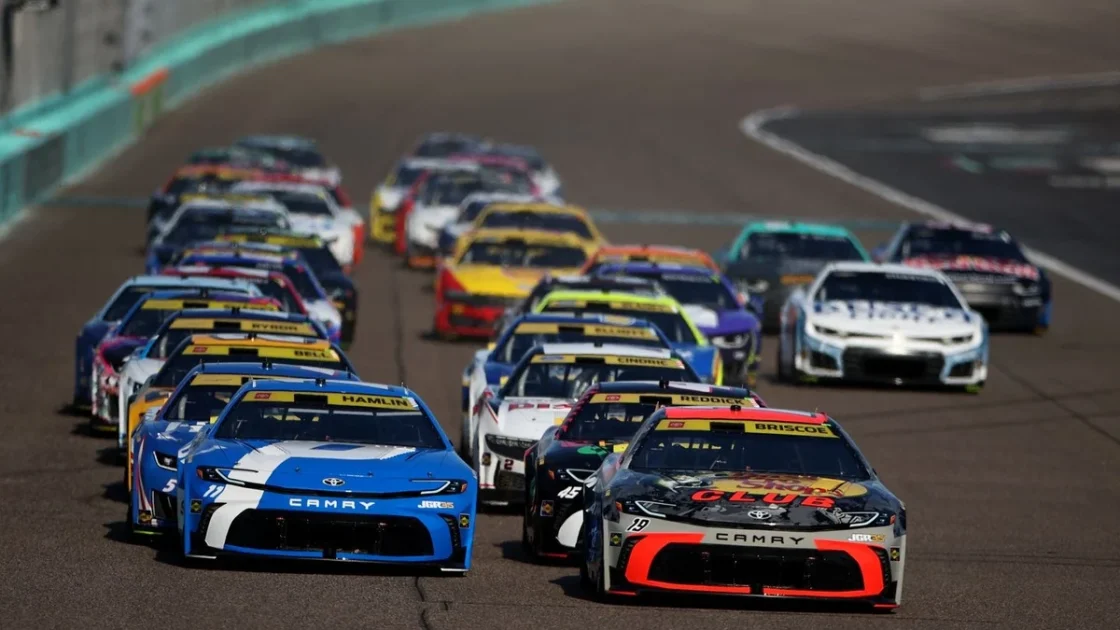
NASCAR is responding to feedback from competitors and fans by incrementally increasing horsepower across the board for the current-generation Cup Series car. In a rules update released on Friday, NASCAR outlined significant performance changes and technical adjustments slated for the upcoming seasons.
Horsepower Increases for Intermediate and Short Tracks
The intermediate rules package will increase from 670 horsepower to 750 horsepower starting with the Coca-Cola 600. Prior to that crown jewel event, the All-Star Race at North Wilkesboro Speedway will feature a short track package increase from 750 horsepower to 800 horsepower. Following the All-Star Race, NASCAR will analyze race quality and engine performance to determine if the 800-horsepower short track engines can be used for the regular season, with a potential rollout at the Bristol Night Race if approved.
Additionally, splitter stuffers—smaller spoilers under the splitter that direct air alongside the outside of the underbody—will be removed at short tracks and road courses next season. John Probst, NASCAR senior VP of racing development, stated as reported by Motorsport.com that this creates a great opportunity and expects it to generate setup variability. “So I think that it will appear as not a big change, but I think a lot of the changes we’re making, including the horsepower, have the potential to be a curveball for the teams as we unload at that first short track or road course next year,” Probst said.
Future Outlook and Long-Term Stability
NASCAR CEO Steve O’Donnell addressed criticism regarding the current-generation car during his state of the sport press conference, noting that business longevity was built into the model. While a Gen-8 car is not currently under consideration, O’Donnell emphasized that NASCAR will continue implementing NextGen improvements alongside industry stakeholders and original equipment manufacturers.
“We have many new owners that have come into the sport,” O’Donnell said during the conference. “We have an ownership landscape that is much healthier than it was before. We have Dodge entering the sport. You have other OEMs who are looking at it.” O’Donnell added that the organization wants a sustainable model for the industry rather than introducing the costs associated with an entirely new car generation.
Qualifying and Technical Adjustments
NASCAR has also announced a qualifying-specific rules package for superspeedways designed to exceed 200 mph—an increase of roughly 20 mph—which will debut at The Clash at Daytona in February and apply to points races at Daytona International Speedway and Talladega Superspeedway. Time trials for these tracks will be reduced to a single round instead of two. Furthermore, minimum damper length rules have been eliminated, and owner standings will now determine the field for races with shortened or canceled qualifying sessions, removing the previous metric-based starting lineups after rainouts.
Crew chiefs are now formally permitted to decide when to transition away from wet-weather tires on ovals. Track limit rules have also been clarified following the fall Talladega playoff race, specifying violations occur when a vehicle’s left-side tires are beneath the left line of the inside double painted lines separating the apron from the racing surface. Penalties and procedures for drivers missing races without sanctioning body approval have been outlined, including points resets to 2,000 for affected drivers and team owners, while absences with NASCAR approval leave points unchanged. Finally, full-time teams must now compete in a minimum of 20 points races with a sealed engine, and an L3 penalty option has been added to secondary series.