
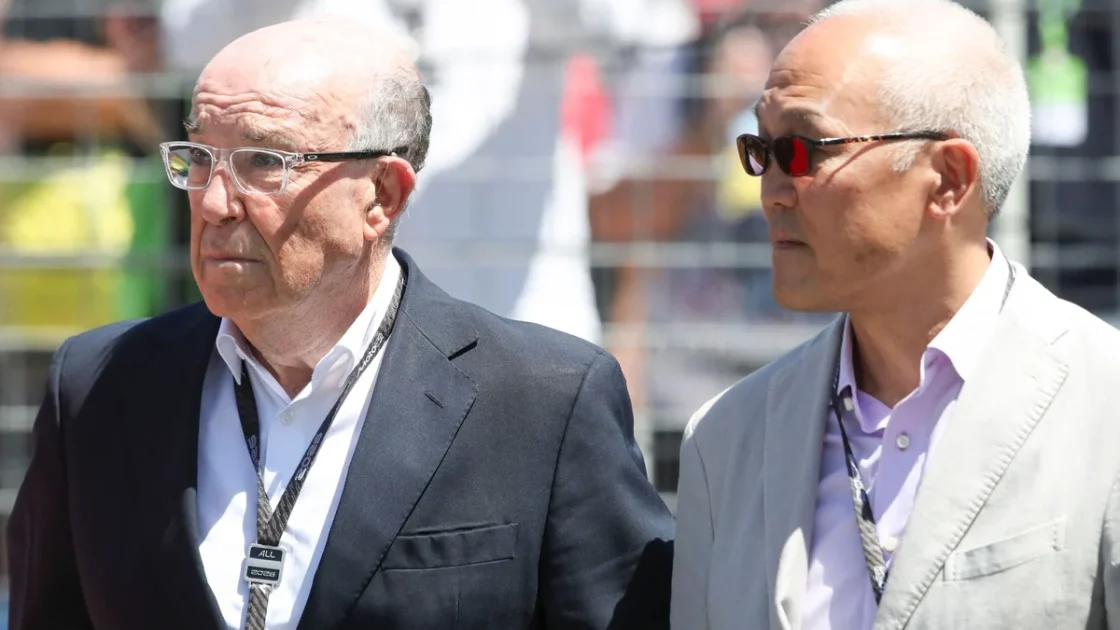
Liberty Media president Derek Chang along with Formula 1 CEO Stefano Domenicali and MotoGP CEO Carmelo Ezpeleta will lead a summit next Monday at a hotel near Valencia, inviting top representatives from all MotoGP teams. The day-long meeting, scheduled several days ago, will proceed as planned despite Marc Marquez’s retirement announcement at the conclusion of the Valencia Grand Prix.
Future Direction and Paddock Layout
During the gathering, MotoGP Sports Entertainment Group executives will outline the championship’s future direction and discuss communication protocols, focusing on social media and internal channels between teams and riders. The meeting will include MotoGP’s entire management team, featuring newly appointed executives primarily from English-speaking countries.
As previously reported by Motorsport.com, the summit will cover proposed format changes for race weekends. These adjustments include a second qualifying session, separate grids for the sprint and grand prix races, and revised schedules moving Saturday sessions and Sunday’s main race to later times. Additionally, organizers will present plans for a new paddock layout that places the premier class in a more exclusive area separate from other categories.
Another major point of discussion is the mandatory minimum annual salary of €500,000 for MotoGP riders starting in 2027, a policy that teams previously attempted but failed to delay.
Improving Communication and Rider Relations
Carlos Ezpeleta, the newly appointed deputy CEO of MotoGP, told Motorsport.com in Qatar that communication between teams and riders represents one of the series’ primary concerns. He noted that the championship faced greater exposure and public noise surrounding the Qatar Grand Prix than other sports present at the event, driven partly by rider commentary on social media. Ezpeleta emphasized that the series must exert better control over these communications moving forward and collaborate more effectively with both teams and riders.
MotoGP has pinpointed three specific communication breakdowns between manufacturers and riders. The first involved a manufacturer proposal to reduce the number of motorcycles per rider from two to one, which generated grid backlash because several riders remained unaware their own engineers supported the idea.
A second friction point involved the revised weekend format, including the new qualifying session, schedule adjustments, and rider concerns about driving at maximum limits from Friday’s first practice until the end of Sunday’s race. Many competitors discovered these modifications through media reports.
The elimination of Sunday morning warm-ups starting next year served as a third sensitive issue, with riders among the final stakeholders notified. This change aligns with a broader initiative to expand events and off-track duties for riders, incorporating penalties for individuals who miss minimum participation thresholds. This escalation in mandatory duties has emerged as a central source of conflict between MotoGP management and the riders.