
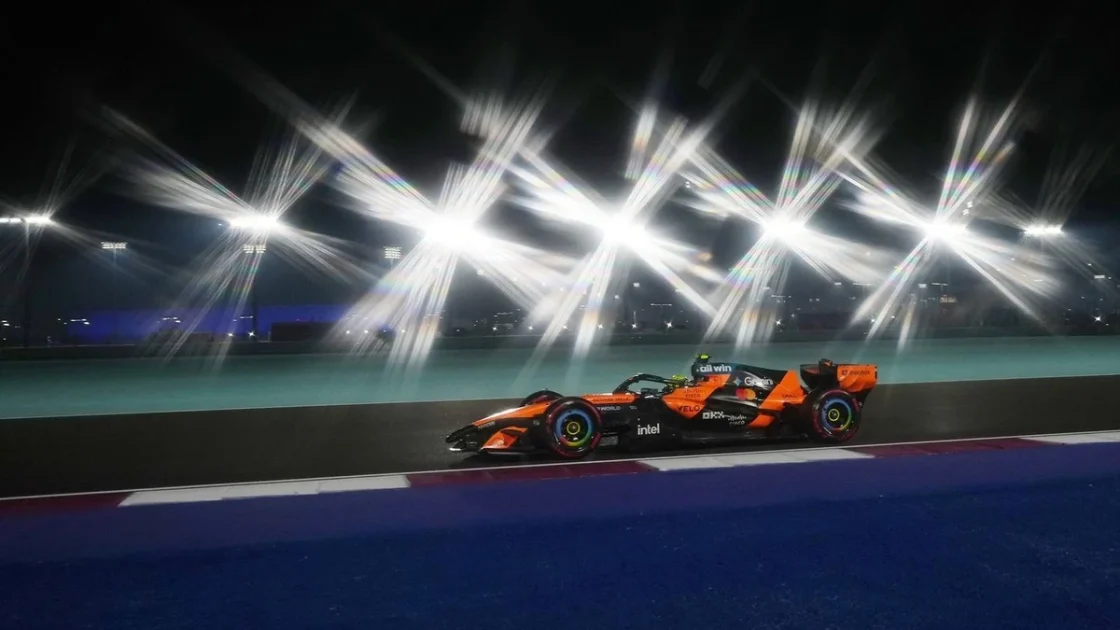
McLaren team principal Andrea Stella has requested clear guidance from Formula 1 tyre supplier Pirelli after the manufacturer confirmed it will not lower the stint limit for the Qatar Grand Prix. Drivers face a restriction of maximum stint lengths of 27 laps during the 57-lap race at the Lusail International Circuit, which is two laps higher than the limit used in 2025.
Tyre Wear and Strategic Challenges
The restriction is necessary because tyre wear is particularly significant at the high-energy track, with Pirelli observing instances of complete wear on high-fuel runs after just 15 laps during Friday practice. Although tyre degradation is higher than expected, Pirelli believes the limit will force teams to pit early, but Stella questions this approach.
As reported by Motorsport.com, Stella explained after Saturday’s qualifying that unlike other circuits where poor rubber leads to lost lap time and a self-regulating mechanism, the lap times at Lusail remain decent despite rubber loss. Consequently, teams face strategic incentives to stay out longer, which results in operating tyres in an off-design condition with very little rubber remaining.
A primary factor is that Lusail is exceptionally smooth compared to other high-downforce circuits like Monaco, Hungary, Netherlands, Malaysia, and Singapore, which did not have imposed stint limits. Stella stated that McLaren is discussing strategy approaches with Pirelli because no teams operated as far as the limit suggests during practice.
Clarifying McLaren’s stance, Stella added, “For clarity, we are not pushing Pirelli. We don’t have the information, we don’t have the technical competence.” He noted that the team respects that tyres are Pirelli’s product managed alongside the FIA, but wants clear guidance when tyres present high local wear while lap times still tempt strategic extensions. Stella contrasted tyre management with other car parameters that rely on quantitative measurements like temperatures and pressures, pointing out that teams lack equivalent detailed information for tyres and therefore require criteria from the experts to guide strategic decisions.
Impact on Competition and Mercedes Performance
Stella also expressed concern that the current situation benefits Mercedes, which has topped every session with a 1-2 finish and secured pole position with George Russell finishing 0.480 seconds ahead of McLaren driver Lando Norris in third. The Mercedes car excels in high-speed conditions, and because the track is smooth, the team can find a perfect setup without other mitigating circumstances.
Mercedes has previously experienced setup struggles since introducing an upgrade in Malaysia, winning only one of six grands prix while simultaneously clinching its ninth constructors’ title. Stella noted that the circuit places a clear premium on downforce in medium and high-speed sections, making Mercedes the strongest package due to its high downforce delivery and the ability to run a stiff setup that limits ride height windows on the smooth surface.
Formula 1 competitors will head into the main race at Lusail International Circuit facing these strict stint boundaries and strategic unknowns.