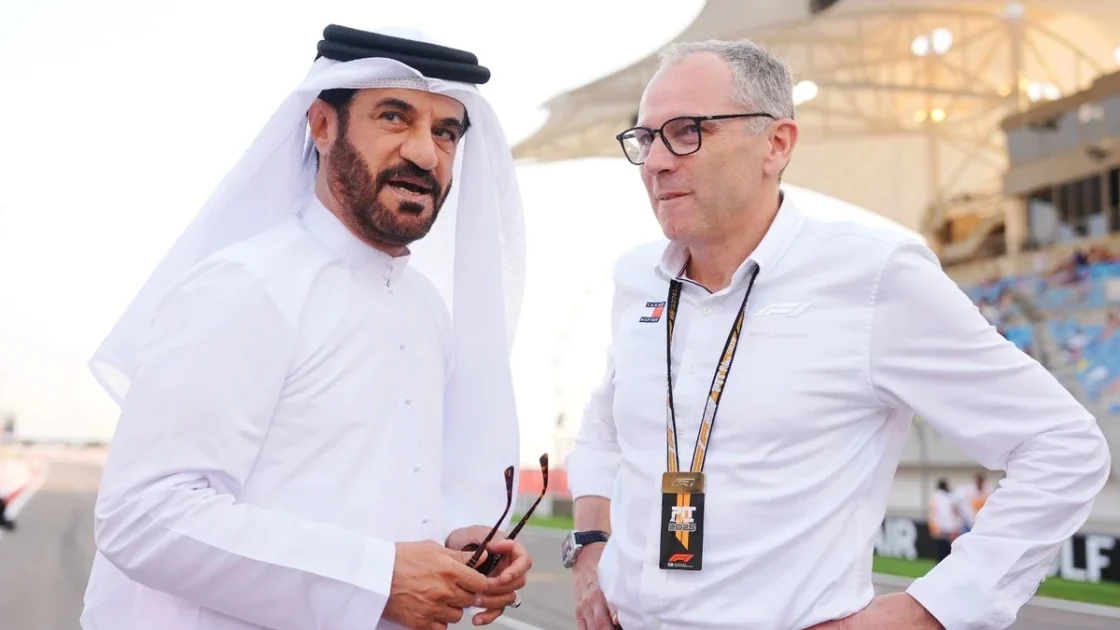
A high-stakes meeting between Formula 1 engine manufacturers, the FIA, and commercial rights holders regarding future engine regulations ended in confusion this week. The uncertainty followed a now-deleted Instagram post from FIA president Mohammed Ben Sulayem, which appeared to prematurely announce a return to V8 engines for the 2030 season.
The Deleted Announcement
The social media post, which featured an FIA-branded graphic and the sound of a high-revving V8 engine, carried the message: “You spoke, we listened. V8s coming soon.” However, the post and related content were removed from all FIA channels shortly after they appeared, leaving the status of the 2030 engine plans in doubt.
Ben Sulayem has been a vocal proponent of shifting away from the current turbocharged V6 hybrid power units toward a simpler, more traditional engine concept. While the current technical regulations are set to remain until 2031, the FIA president has made it clear he intends to accelerate the introduction of a new generation of engines to 2030. Implementing such a change requires a consensus among the FIA, teams, manufacturers, and the commercial rights holder, a process governed by the Concorde Agreement.
Negotiating the Future Engine
According to reports, discussions have centered on a potential 2.1-litre turbocharged V8 engine featuring a reduced electrical component. This proposal represents a compromise; Ben Sulayem initially favored naturally aspirated V8s with minimal electrical assistance, similar to the Kinetic Energy Recovery System (KERS) introduced in 2009. The president argues that simplifying the engines would lower development costs, attract non-manufacturer engine suppliers, and reduce the overall weight of the cars.
The proposal has faced varying levels of resistance from manufacturers. While Ford and Cadillac have reportedly supported the removal of turbos and a smaller hybrid element, other manufacturers, including Audi and Honda, have insisted on maintaining a significant level of hybridization. There is broader agreement on the move to an eight-cylinder configuration, as V8s remain relevant to road car markets and are generally considered to produce a more desirable sound than the current V6 units.
Path to a Final Decision
Under the proposed framework, the turbocharging principle would likely remain but with smaller compressors and lower boost pressures to minimize lag. The electrical motor output would be reduced from the current 350 kilowatts (kW) to 100kW for general use, with an additional 100kW available for overtaking maneuvers.
Despite the premature social media post, the incident suggests that while a deal is nearing completion, stakeholders have yet to reach a unanimous agreement. Manufacturers have emphasized the need for regulatory clarity by the end of this year to ensure sufficient development time for a 2030 introduction. The FIA aims to present a finalized framework to the World Motor Sport Council in Shanghai on 10 December, though a formal consensus must be secured among all parties before that meeting can proceed.