
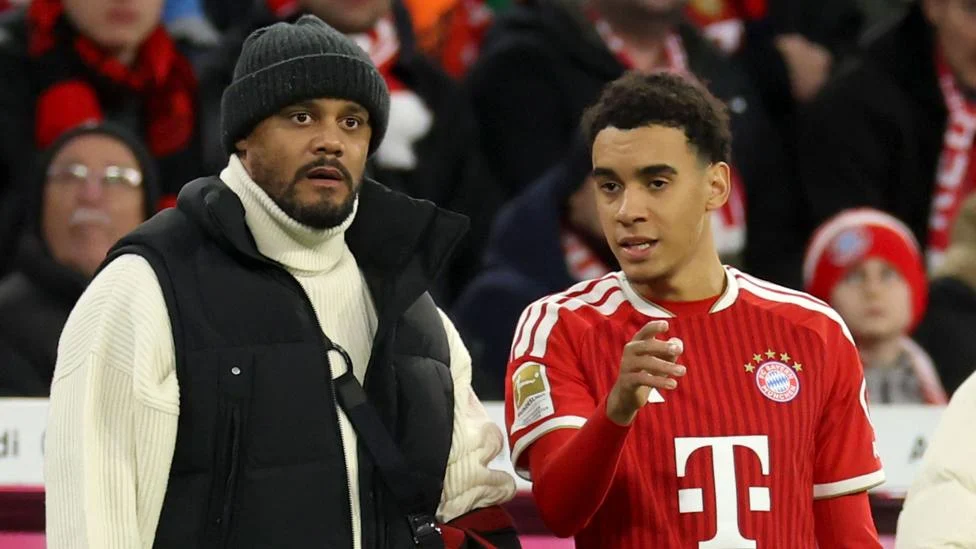
A public conflict has broken out between Bayern Munich leadership and the representatives of midfielder Jamal Musiala following recent revelations regarding the 23-year-old’s medical status. The player has been diagnosed with absence seizures, a neurological disorder that causes temporary lapses in consciousness and physical responsiveness.
Discovery of Condition and Contract Terms
According to sources connected to Bayern Munich, Musiala’s condition was not identified until April 2025, several months after he signed a lucrative contract extension in February 2025. At the time of the deal, parties involved considered the player to be in excellent physical health. The neurological diagnosis followed medical examinations conducted shortly after Musiala was involved in a high-speed vehicle crash in April, an incident that resulted in the revocation of his driving license. Public prosecutors confirmed there was no evidence linking the driving accident to a seizure or establishing it as the cause of his illness.
The contract negotiated between sports director Max Eberl and Musiala’s lawyer and agent, Christian Schmid, secured a base annual wage of £15m that could rise to £21m, alongside a £25m signing bonus spread across the deal’s duration and an executive box at the Allianz Arena. The agreement also contained a six-month sick pay provision, which exceeds the standard six-week period typical in Bundesliga contracts, though it remains shorter than the 18-month full-salary coverage provided to Premier League athletes. Musiala’s camp retained external medical specialists to manage the daily medication required for the condition, keeping Bayern team doctor Jochen Hahne informed.
In addition to his neurological condition, Musiala faced multiple physical injuries over the past year. He suffered a fractured fibula and ankle damage during a FIFA Club World Cup match following a challenge by Paris Saint-Germain goalkeeper Gianluigi Donnarumma, later underwent procedure to extract a metal plate from his foot after the 2026 World Cup, and recently experienced a hamstring tear.
Boardroom Friction and Public Criticism
Tensions escalated publicly following a league fixture against Cologne. Karl-Heinz Rummenigge, a member of Bayern’s supervisory board, conducted an unannounced television interview from the stadium stands to express dissatisfaction with the player’s compensation given his medical state.
“He has a health issue, which is known, and it is known that he has a contract which includes hefty sums of money,” Rummenigge said. “You need to talk to the family, to the player and most importantly to the agency, because these sums are – with all due respect – not justifiable any longer.”
The remarks prompted defensive efforts from club president Herbert Hainer and board chairman Jan-Christian Dreesen during a subsequent general meeting. At the assembly, club member and neurologist Jonathan Hoffmann received support from attending members after criticizing the public statements made against the midfielder. Rummenigge and fellow board figure Uli Hoeness have reportedly directed blame toward Eberl for finalizing the contract terms under pressure, as Musiala’s original deal was set to expire in 2026 amid interest from clubs such as Real Madrid.
Support for the player has come from within the squad and coaching staff. Head coach Vincent Kompany and Eberl offered backing, while teammate Joshua Kimmich criticized the public comments following a 2-1 Champions League defeat against Lille. “Of course, the club is above all and bigger than the player, but not bigger than the human. This is an absolute no-go and also not Bayern-like,” Kimmich said. Following criticism from international players’ union Fifpro, Bayern Munich released an official statement confirming that executive leadership held a constructive meeting with Musiala’s management to ensure the player’s well-being remains the central priority.