Major League Baseball transactions during the offseason typically revolve around predictable free-agent signings, while trades operate as an entirely different and unpredictable beast. Unlike free agency’s logical matchmaker process, forecasting trades is nearly impossible due to varying contract sizes, lengths, and expansive minor-league universes.
Recent Offseason Blockbusters
The unpredictability of trades was recently highlighted by two significant deals completed early in the week. Seattle Mariners president of baseball operations Jerry Dipoto noted that after focusing on other infield targets, a six-player swap headlined by All-Star third baseman Maikel Garcia came into focus. Kansas City Royals front-office head J.J. Picollo admitted he was unsure if a pitcher like Bryce Miller would be attainable, but conversations at the GM Meetings in Las Vegas crystallized the possibility into reality, sending three major-league pitchers to Kansas City.
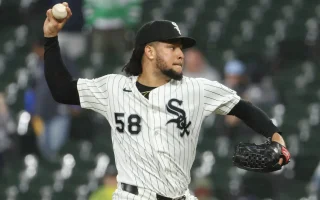
In another surprising move, the Chicago White Sox sent veteran Luis Castillo and rotation mainstay Davis Martin to the Colorado Rockies for prospects Sean Sullivan and Douglas Veliz. White Sox general manager Chris Getz executed the money-motivated trade to offload Castillo’s salary—leaving one year at $22.75 million—roughly seven hours after fielding questions about adding starting pitching, creating a deal that fans could never have anticipated.
The Constant Art of Trade Talks
For executives, trades require a year-round exercise in patience and delicate collaboration. Dipoto, who made his 209th trade since taking over Seattle’s baseball operations in 2015 by acquiring Garcia, emphasized that his front office is always proactive. This offseason brings added urgency with a potential team-owner lockout looming upon the expiration of the collective bargaining agreement at 11:59 p.m. on Dec. 1, an artificial deadline echoing the circumstances of the 201- lockout.
Tampa Bay Rays president of baseball operations Erik Neander explained that trade talks stem from relationships and trust, serving as a constant element of improving the club. As a small-market team relying heavily on trades, the Rays have completed 20 deals with Seattle since Dipoto arrived, including last year’s blockbuster for Randy Arozarena. Other executives shaped by the Rays’ front office, such as St. Louis Cardinals president of baseball operations Chaim Bloom and Athletics president of baseball operations Taylor Smith, agree that possessing good information and acting aggressively are key to executing successful deals.
Houston Astros general manager Randy Flores, stepping into his role, noted that building accurate information relies on internal and external relationships. Meanwhile, Miami Marlins president of baseball operations Peter Bendix pointed out that trade timelines vary wildly. “There are trades that I’ve participated in that have been two years in the making, and there have been trades that have taken two minutes,” Bendix said.
Neander summarized the difficult nature of the pursuit by explaining that executives must understand the player universe, priorities, and other teams’ goals before knocking on doors. When those doors remain closed, Neander added, “And if they’re not opening, find Seattle.”